A Brief Introduction to Corrections
Robert D. Hanser
- University of Louisiana at Monroe

If you’re in the Americas, please visit our Sage College Publishing website to purchase or sample this book:
Go to College Publishing WebsiteDescription
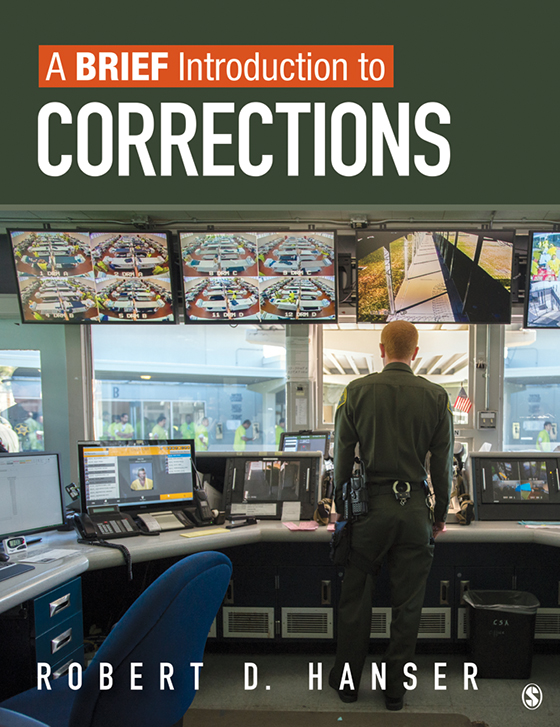
A Brief Introduction to Corrections is a condensed version of the best-selling Introduction to Corrections by Robert D. Hanser. This new text provides students with an overview of corrections that is both practitioner-driven and grounded in modern research. Experienced correctional practitioner and scholar Robert D. Hanser shows readers how the corrections system actually works, from classification to security and treatment to demonstrating how and why correctional practices are implemented.
INSTRUCTORS: A Brief Introduction to Corrections is accompanied by a complete teaching and learning package! Contact your rep to request a demo.
INSTRUCTORS: A Brief Introduction to Corrections is accompanied by a complete teaching and learning package! Contact your rep to request a demo.
- Sage Premium Video
Sage Premium Video includes original Criminal Justice in Practice Videos, Prison Tour Videos, and Career Videos that boost comprehension and bolster analysis. Watch a sample. - Interactive eBook
Your students save when you bundle the print book with the Interactive eBook (Bundle ISBN: 978-1-0718-1326-3), which includes access to Sage Premium Video and other multimedia tools. Learn more. - LMS Cartridge (formally known as Sage Coursepacks)
Import this title’s instructor resources into your school’s learning management system (LMS) and save time. Don’t use an LMS? You can still access all of the same online resources for this title via the password-protected Instructor Resource Site. Learn more.
Contents
Preface
Preface
Interactive eBook
Interactive eBook
Digital Resources
Digital Resources
Acknowledgments
- CHAPTER 1: Early History of Punishment and the Development of Prisons in the United States
- Defining Corrections: A Variety of Possibilities
- The Notion of Punishment and Corrections Throughout History
- The Enlightenment and Correctional Reform
- Punishment During Early American History: 1700s–1800s
- The Age of the Reformatory in America
- Prisons in America: 1900s to the End of World War II
- Modern-Day Systems: Federal and State Inmate Characteristics
- Conclusion
- Discussion Questions
- Key Terms
- Applied Exercise 1.1
- What Would You Do?
- CHAPTER 2: Ideological and Theoretical Underpinnings to Sentencing and Correctional Policy
- Introduction
- Philosophical Underpinnings
- Types of Sanctions
- Arguments For and Against the Death Penalty
- Brutalization Hypothesis
- Sentencing Models
- Criminological Theories and Corrections
- Conclusion
- Discussion Questions
- Key Terms
- Key Case
- Applied Exercise 2.1
- What Would You Do?
- CHAPTER 3: Correctional Law and Legal Liabilities
- Introduction
- The Hands-Off Doctrine
- The Emergence of Inmate Rights
- Corrections and the Constitution
- Constitutionality of the Death Penalty
- A Restrained Hands-On Perspective and Court Deference to Prisons
- State and Federal Legal Liabilities
- Compliance With Judicial Orders
- Conclusion
- Discussion Questions
- Key Terms
- Key Cases
- Applied Exercise 3.1
- What Would You Do?
- CHAPTER 4: Jail and Detention Facilities
- Introduction
- Jails in the Past
- The Modern Jail
- Jails as Short-Term Institutions
- Jails as Long-Term Facilities
- Health Care in Jails
- Jail Training Standards
- Specialized Types of Jail Sentences
- Special Issues in Jails
- Conclusion
- Discussion Questions
- Key Terms
- Applied Exercise 4.1
- What Would You Do?
- CHAPTER 5: Probation and Intermediate Sanctions
- Introduction
- A Brief History of Probation
- Contemporary Probation: When the Jail Is Full
- Characteristics of Probationers
- Probation Officers
- Probation Revocation
- Types of Intermediate Sanctions
- Conclusion
- Discussion Questions
- Key Terms
- Applied Exercise 5.1
- What Would You Do?
- CHAPTER 6: Facility Design and Classification in Jails and Prisons
- Introduction
- Prison Facility Designs Throughout History
- The Rise of the Supermax
- Prison Designs
- Internal Security
- Technology Systems in Prisons
- Rationale for Classification
- The Goals of Classification Systems
- Special Housing Assignments
- Conclusion
- Discussion Questions
- Key Terms
- Key Cases
- Applied Exercise 6.1
- What Would You Do?
- CHAPTER 7: Prison Subculture and Prison Gang Influence
- Introduction
- Theories of Prison Subculture
- The Inmate Subculture of Modern Times
- The Impact of the Inmate Subculture on Corrections Staff
- Prisonization
- The Guard Subculture
- The Impact of Gangs Upon Prison Subculture
- Major Prison Gangs in the United States
- Conclusion
- Discussion Questions
- Key Terms
- Applied Exercise 7.1
- What Would You Do?
- CHAPTER 8: Female Offenders in Correctional Systems
- Introduction
- Female Offenders Behind Bars: A Detailed Look at Percentages and Rates
- History of Women Behind Bars
- Issues Related to the Modern-Day Female Offender Population
- Considerations for Female Offenders
- Conditions of Care for Female Offenders
- Female Offenders and Treatment Implications
- Conclusion
- Discussion Questions
- Key Terms
- Applied Exercise 8.1
- What Would You Do?
- CHAPTER 9: Specialized Inmate Populations and Juvenile Correctional Systems
- Introduction
- Administrative Considerations
- Prison Subculture and Special Needs Offenders
- Mentally Ill Offenders
- Sex Offenders
- Safety, Security, and Assistance for LGBTI Inmates
- Elderly Offenders
- Juveniles and the Correctional System
- Screening and Classification of Juvenile Offenders
- Detention Versus Incarceration
- Incarceration of Juveniles
- Conclusion
- Discussion Questions
- Key Terms
- Key Cases
- Applied Exercise 9.1
- What Would You Do?
- CHAPTER 10: Correctional Administration and Prison Programming
- Introduction
- Federal Bureau of Prisons Administration
- Correctional System Administration
- The Corrections Workforce
- Prison Programming
- Medical Care
- Educational Programs
- Prison Work Programs
- Drug Treatment Programs
- Recreational Programs
- Religious Programs
- Conclusion
- Discussion Questions
- Key Terms
- Applied Exercise 10.1
- What Would You Do?
- CHAPTER 11: Parole and Reintegration
- Introduction
- Parole and Parolee Characteristics
- The Beginning History of Parole
- Parole at the State Level
- Parole as the Correctional Release Valve for Prisons
- The Role of Institutional Parole Officers
- Common Conditions of Parole
- Reentry Initiatives
- Violations of Parole, Parole Warrants, and Parole Revocation Proceedings
- Conclusion
- Discussion Questions
- Key Terms
- Key Case
- Applied Exercise 11.1
- What Would You Do?
- CHAPTER 12: Program Evaluation, Evidence-Based Practices, and Future Trends in Corrections
- Introduction
- Evaluation Research
- Focus Topic 12.1: Commonly Used Measures of Reentry Program Performance
- Evidence-Based Practice
- The Future of Corrections
- Conclusion
- Discussion Questions
- Key Terms
- Applied Exercise 12.1
- What Would You Do?
Glossary
Glossary
References
References
Index
Index
About the Author
About the Author
Description
A Brief Introduction to Corrections is a condensed version of the best-selling Introduction to Corrections by Robert D. Hanser. This new text provides students with an overview of corrections that is both practitioner-driven and grounded in modern research. Experienced correctional practitioner and scholar Robert D. Hanser shows readers how the corrections system actually works, from classification to security and treatment to demonstrating how and why correctional practices are implemented.
INSTRUCTORS: A Brief Introduction to Corrections is accompanied by a complete teaching and learning package! Contact your rep to request a demo.
INSTRUCTORS: A Brief Introduction to Corrections is accompanied by a complete teaching and learning package! Contact your rep to request a demo.
- Sage Premium Video
Sage Premium Video includes original Criminal Justice in Practice Videos, Prison Tour Videos, and Career Videos that boost comprehension and bolster analysis. Watch a sample. - Interactive eBook
Your students save when you bundle the print book with the Interactive eBook (Bundle ISBN: 978-1-0718-1326-3), which includes access to Sage Premium Video and other multimedia tools. Learn more. - LMS Cartridge (formally known as Sage Coursepacks)
Import this title’s instructor resources into your school’s learning management system (LMS) and save time. Don’t use an LMS? You can still access all of the same online resources for this title via the password-protected Instructor Resource Site. Learn more.
Contents
Preface
Preface
Interactive eBook
Interactive eBook
Digital Resources
Digital Resources
Acknowledgments
- CHAPTER 1: Early History of Punishment and the Development of Prisons in the United States
- Defining Corrections: A Variety of Possibilities
- The Notion of Punishment and Corrections Throughout History
- The Enlightenment and Correctional Reform
- Punishment During Early American History: 1700s–1800s
- The Age of the Reformatory in America
- Prisons in America: 1900s to the End of World War II
- Modern-Day Systems: Federal and State Inmate Characteristics
- Conclusion
- Discussion Questions
- Key Terms
- Applied Exercise 1.1
- What Would You Do?
- CHAPTER 2: Ideological and Theoretical Underpinnings to Sentencing and Correctional Policy
- Introduction
- Philosophical Underpinnings
- Types of Sanctions
- Arguments For and Against the Death Penalty
- Brutalization Hypothesis
- Sentencing Models
- Criminological Theories and Corrections
- Conclusion
- Discussion Questions
- Key Terms
- Key Case
- Applied Exercise 2.1
- What Would You Do?
- CHAPTER 3: Correctional Law and Legal Liabilities
- Introduction
- The Hands-Off Doctrine
- The Emergence of Inmate Rights
- Corrections and the Constitution
- Constitutionality of the Death Penalty
- A Restrained Hands-On Perspective and Court Deference to Prisons
- State and Federal Legal Liabilities
- Compliance With Judicial Orders
- Conclusion
- Discussion Questions
- Key Terms
- Key Cases
- Applied Exercise 3.1
- What Would You Do?
- CHAPTER 4: Jail and Detention Facilities
- Introduction
- Jails in the Past
- The Modern Jail
- Jails as Short-Term Institutions
- Jails as Long-Term Facilities
- Health Care in Jails
- Jail Training Standards
- Specialized Types of Jail Sentences
- Special Issues in Jails
- Conclusion
- Discussion Questions
- Key Terms
- Applied Exercise 4.1
- What Would You Do?
- CHAPTER 5: Probation and Intermediate Sanctions
- Introduction
- A Brief History of Probation
- Contemporary Probation: When the Jail Is Full
- Characteristics of Probationers
- Probation Officers
- Probation Revocation
- Types of Intermediate Sanctions
- Conclusion
- Discussion Questions
- Key Terms
- Applied Exercise 5.1
- What Would You Do?
- CHAPTER 6: Facility Design and Classification in Jails and Prisons
- Introduction
- Prison Facility Designs Throughout History
- The Rise of the Supermax
- Prison Designs
- Internal Security
- Technology Systems in Prisons
- Rationale for Classification
- The Goals of Classification Systems
- Special Housing Assignments
- Conclusion
- Discussion Questions
- Key Terms
- Key Cases
- Applied Exercise 6.1
- What Would You Do?
- CHAPTER 7: Prison Subculture and Prison Gang Influence
- Introduction
- Theories of Prison Subculture
- The Inmate Subculture of Modern Times
- The Impact of the Inmate Subculture on Corrections Staff
- Prisonization
- The Guard Subculture
- The Impact of Gangs Upon Prison Subculture
- Major Prison Gangs in the United States
- Conclusion
- Discussion Questions
- Key Terms
- Applied Exercise 7.1
- What Would You Do?
- CHAPTER 8: Female Offenders in Correctional Systems
- Introduction
- Female Offenders Behind Bars: A Detailed Look at Percentages and Rates
- History of Women Behind Bars
- Issues Related to the Modern-Day Female Offender Population
- Considerations for Female Offenders
- Conditions of Care for Female Offenders
- Female Offenders and Treatment Implications
- Conclusion
- Discussion Questions
- Key Terms
- Applied Exercise 8.1
- What Would You Do?
- CHAPTER 9: Specialized Inmate Populations and Juvenile Correctional Systems
- Introduction
- Administrative Considerations
- Prison Subculture and Special Needs Offenders
- Mentally Ill Offenders
- Sex Offenders
- Safety, Security, and Assistance for LGBTI Inmates
- Elderly Offenders
- Juveniles and the Correctional System
- Screening and Classification of Juvenile Offenders
- Detention Versus Incarceration
- Incarceration of Juveniles
- Conclusion
- Discussion Questions
- Key Terms
- Key Cases
- Applied Exercise 9.1
- What Would You Do?
- CHAPTER 10: Correctional Administration and Prison Programming
- Introduction
- Federal Bureau of Prisons Administration
- Correctional System Administration
- The Corrections Workforce
- Prison Programming
- Medical Care
- Educational Programs
- Prison Work Programs
- Drug Treatment Programs
- Recreational Programs
- Religious Programs
- Conclusion
- Discussion Questions
- Key Terms
- Applied Exercise 10.1
- What Would You Do?
- CHAPTER 11: Parole and Reintegration
- Introduction
- Parole and Parolee Characteristics
- The Beginning History of Parole
- Parole at the State Level
- Parole as the Correctional Release Valve for Prisons
- The Role of Institutional Parole Officers
- Common Conditions of Parole
- Reentry Initiatives
- Violations of Parole, Parole Warrants, and Parole Revocation Proceedings
- Conclusion
- Discussion Questions
- Key Terms
- Key Case
- Applied Exercise 11.1
- What Would You Do?
- CHAPTER 12: Program Evaluation, Evidence-Based Practices, and Future Trends in Corrections
- Introduction
- Evaluation Research
- Focus Topic 12.1: Commonly Used Measures of Reentry Program Performance
- Evidence-Based Practice
- The Future of Corrections
- Conclusion
- Discussion Questions
- Key Terms
- Applied Exercise 12.1
- What Would You Do?
Glossary
Glossary
References
References
Index
Index
About the Author
About the Author

November 2019 | 392 pages | Sage US
| Format | Published Date | ISBN | Price |
|---|
A Brief Introduction to Corrections is a condensed version of the best-selling Introduction to Corrections by Robert D. Hanser. This new text provides students with an overview of corrections that is both practitioner-driven and grounded in modern research. Experienced correctional practitioner and scholar Robert D. Hanser shows readers how the corrections system actually works, from classification to security and treatment to demonstrating how and why correctional practices are implemented.
INSTRUCTORS: A Brief Introduction to Corrections is accompanied by a complete teaching and learning package! Contact your rep to request a demo.
INSTRUCTORS: A Brief Introduction to Corrections is accompanied by a complete teaching and learning package! Contact your rep to request a demo.
- Sage Premium Video
Sage Premium Video includes original Criminal Justice in Practice Videos, Prison Tour Videos, and Career Videos that boost comprehension and bolster analysis. Watch a sample. - Interactive eBook
Your students save when you bundle the print book with the Interactive eBook (Bundle ISBN: 978-1-0718-1326-3), which includes access to Sage Premium Video and other multimedia tools. Learn more. - LMS Cartridge (formally known as Sage Coursepacks)
Import this title’s instructor resources into your school’s learning management system (LMS) and save time. Don’t use an LMS? You can still access all of the same online resources for this title via the password-protected Instructor Resource Site. Learn more.
Table Of Contents:
- Preface
- Interactive eBook
- Digital Resources
- Acknowledgments
- CHAPTER 1: Early History of Punishment and the Development of Prisons in the United States
- Defining Corrections: A Variety of Possibilities
- The Notion of Punishment and Corrections Throughout History
- The Enlightenment and Correctional Reform
- Punishment During Early American History: 1700s–1800s
- The Age of the Reformatory in America
- Prisons in America: 1900s to the End of World War II
- Modern-Day Systems: Federal and State Inmate Characteristics
- Conclusion
- Discussion Questions
- Key Terms
- Applied Exercise 1.1
- What Would You Do?
- CHAPTER 2: Ideological and Theoretical Underpinnings to Sentencing and Correctional Policy
- Introduction
- Philosophical Underpinnings
- Types of Sanctions
- Arguments For and Against the Death Penalty
- Brutalization Hypothesis
- Sentencing Models
- Criminological Theories and Corrections
- Conclusion
- Discussion Questions
- Key Terms
- Key Case
- Applied Exercise 2.1
- What Would You Do?
- CHAPTER 3: Correctional Law and Legal Liabilities
- Introduction
- The Hands-Off Doctrine
- The Emergence of Inmate Rights
- Corrections and the Constitution
- Constitutionality of the Death Penalty
- A Restrained Hands-On Perspective and Court Deference to Prisons
- State and Federal Legal Liabilities
- Compliance With Judicial Orders
- Conclusion
- Discussion Questions
- Key Terms
- Key Cases
- Applied Exercise 3.1
- What Would You Do?
- CHAPTER 4: Jail and Detention Facilities
- Introduction
- Jails in the Past
- The Modern Jail
- Jails as Short-Term Institutions
- Jails as Long-Term Facilities
- Health Care in Jails
- Jail Training Standards
- Specialized Types of Jail Sentences
- Special Issues in Jails
- Conclusion
- Discussion Questions
- Key Terms
- Applied Exercise 4.1
- What Would You Do?
- CHAPTER 5: Probation and Intermediate Sanctions
- Introduction
- A Brief History of Probation
- Contemporary Probation: When the Jail Is Full
- Characteristics of Probationers
- Probation Officers
- Probation Revocation
- Types of Intermediate Sanctions
- Conclusion
- Discussion Questions
- Key Terms
- Applied Exercise 5.1
- What Would You Do?
- CHAPTER 6: Facility Design and Classification in Jails and Prisons
- Introduction
- Prison Facility Designs Throughout History
- The Rise of the Supermax
- Prison Designs
- Internal Security
- Technology Systems in Prisons
- Rationale for Classification
- The Goals of Classification Systems
- Special Housing Assignments
- Conclusion
- Discussion Questions
- Key Terms
- Key Cases
- Applied Exercise 6.1
- What Would You Do?
- CHAPTER 7: Prison Subculture and Prison Gang Influence
- Introduction
- Theories of Prison Subculture
- The Inmate Subculture of Modern Times
- The Impact of the Inmate Subculture on Corrections Staff
- Prisonization
- The Guard Subculture
- The Impact of Gangs Upon Prison Subculture
- Major Prison Gangs in the United States
- Conclusion
- Discussion Questions
- Key Terms
- Applied Exercise 7.1
- What Would You Do?
- CHAPTER 8: Female Offenders in Correctional Systems
- Introduction
- Female Offenders Behind Bars: A Detailed Look at Percentages and Rates
- History of Women Behind Bars
- Issues Related to the Modern-Day Female Offender Population
- Considerations for Female Offenders
- Conditions of Care for Female Offenders
- Female Offenders and Treatment Implications
- Conclusion
- Discussion Questions
- Key Terms
- Applied Exercise 8.1
- What Would You Do?
- CHAPTER 9: Specialized Inmate Populations and Juvenile Correctional Systems
- Introduction
- Administrative Considerations
- Prison Subculture and Special Needs Offenders
- Mentally Ill Offenders
- Sex Offenders
- Safety, Security, and Assistance for LGBTI Inmates
- Elderly Offenders
- Juveniles and the Correctional System
- Screening and Classification of Juvenile Offenders
- Detention Versus Incarceration
- Incarceration of Juveniles
- Conclusion
- Discussion Questions
- Key Terms
- Key Cases
- Applied Exercise 9.1
- What Would You Do?
- CHAPTER 10: Correctional Administration and Prison Programming
- Introduction
- Federal Bureau of Prisons Administration
- Correctional System Administration
- The Corrections Workforce
- Prison Programming
- Medical Care
- Educational Programs
- Prison Work Programs
- Drug Treatment Programs
- Recreational Programs
- Religious Programs
- Conclusion
- Discussion Questions
- Key Terms
- Applied Exercise 10.1
- What Would You Do?
- CHAPTER 11: Parole and Reintegration
- Introduction
- Parole and Parolee Characteristics
- The Beginning History of Parole
- Parole at the State Level
- Parole as the Correctional Release Valve for Prisons
- The Role of Institutional Parole Officers
- Common Conditions of Parole
- Reentry Initiatives
- Violations of Parole, Parole Warrants, and Parole Revocation Proceedings
- Conclusion
- Discussion Questions
- Key Terms
- Key Case
- Applied Exercise 11.1
- What Would You Do?
- CHAPTER 12: Program Evaluation, Evidence-Based Practices, and Future Trends in Corrections
- Introduction
- Evaluation Research
- Focus Topic 12.1: Commonly Used Measures of Reentry Program Performance
- Evidence-Based Practice
- The Future of Corrections
- Conclusion
- Discussion Questions
- Key Terms
- Applied Exercise 12.1
- What Would You Do?
- Glossary
- References
- Index
- About the Author