Engaging Theories in Interpersonal Communication
Multiple Perspectives
Second Edition
Dawn O. Braithwaite
- University of Nebraska - Lincoln, USA
Paul Schrodt
- Texas Christian University, USA

If you’re in the Americas, please visit our Sage College Publishing website to purchase or sample this book:
Go to College Publishing WebsiteDescription
Winner of the 2017 NCA Gerald R. Miller Book Award!
Use and Understand Interpersonal Communication Theories
Engaging Theories in Interpersonal Communication: Multiple Perspectives highlights key theories used to guide interpersonal communication research. The Second Edition features 30 theory chapters written by leading scholars in interpersonal communication, including new coverage of evolutionary theories, Problematic Integration Theory, supportive communication theories, Theory of Motivated Information Management, critical approaches to interpersonal communication, and Media Multiplexity Theory. Each theory chapter follows the same structure to help readers easily find and compare information across theories. An updated introductory chapter maps the history and the current state of interpersonal communication theory since publication of the first edition, based on comprehensive analysis of published scholarship. Presenting both classic and cutting-edge issues, the book organizes theories into three clusters—theories that are individually-centered; theories that are focused on discourse and interaction processes; and theories that examine how communication functions in personal relationships. All authors interweave abstract theoretical concepts with concrete examples in order to maximize readability and comprehension.
Use and Understand Interpersonal Communication Theories
Engaging Theories in Interpersonal Communication: Multiple Perspectives highlights key theories used to guide interpersonal communication research. The Second Edition features 30 theory chapters written by leading scholars in interpersonal communication, including new coverage of evolutionary theories, Problematic Integration Theory, supportive communication theories, Theory of Motivated Information Management, critical approaches to interpersonal communication, and Media Multiplexity Theory. Each theory chapter follows the same structure to help readers easily find and compare information across theories. An updated introductory chapter maps the history and the current state of interpersonal communication theory since publication of the first edition, based on comprehensive analysis of published scholarship. Presenting both classic and cutting-edge issues, the book organizes theories into three clusters—theories that are individually-centered; theories that are focused on discourse and interaction processes; and theories that examine how communication functions in personal relationships. All authors interweave abstract theoretical concepts with concrete examples in order to maximize readability and comprehension.
Contents
Introduction: Meta-Theory and Theory in Interpersonal Communication Research
Introduction: Meta-Theory and Theory in Interpersonal Communication Research
PART I: Individually Centered Theories of Interpersonal Communication
- Action Assembly Theory: Forces of Creation
- Attribution Theory: Finding Good Cause in the Search for Theory
- Evolutionary Theories: Explaining the Links Between Biology and Interpersonal Communication
- Goals-Plans-Action Theory of Message Production: Making Influence Messages
- Imagined Interaction Theory: Mental Representations of Interpersonal Communication
- Planning Theory of Communication: Goal Attainment Through Communicative Action
- Problematic Integration Theory and Uncertainty Management Theory: Learning to Hear and Speak to Different Forms of Uncertainty
- Relational Framing Theory: Drawing Inferences About Relationships From Interpersonal Interactions
- Supportive Communication Theories: Dual-Process Theory of Supportive Message Outcomes and Advice Response Theory
- Theory of Motivated Information Management: Struggles With Uncertainty and Its Outcomes
PART II: Discourse/Interaction-Centered Theories of Interpersonal Communication
- Communication Accommodation Theory: A Situated Framework for Relational, Family, and Intergroup Dynamics
- Communication Theory of Identity: Multilayered Understandings of Performed Identities
- Critical Approaches to Interpersonal Communication: Charting a Future
- Critical Feminist Theories: Giving Voice and Visibility to Women’s Experiences in Interpersonal Relations
- Expectancy Violations Theory and Interaction Adaptation Theory: From Expectations to Adaptation
- Face Theory: Goffman’s Dramatistic Approach to Interpersonal Interaction
- Grounded Practical Theory: Theorizing Communicative Practices
- Narrative Theories: Making Sense of Interpersonal Communication
- Politeness Theory: How We Use Language to Save Face
- Relational Dialectics Theory: Navigating Meaning From Competing Discourses
- Speech Codes Theory: Traces of Culture in Interpersonal Communication
PART III: Relationship-Centered Theories of Interpersonal Communication
- Affection Exchange Theory: A Bio-Evolutionary Look at Affectionate Communication
- Attachment Theory: A Communication Perspective
- Communication Privacy Management Theory: Significance for Interpersonal Communication
- Interpersonal Deception Theory: Purposive and Interdependent Behavior During Deceptive Interpersonal Interactions
- Media Multiplexity Theory: Technology Use and Interpersonal Tie Strength
- The Relational Turbulence Model: Communicating During Times of Transition
- Stage Theories of Relationship Development: Charting the Course of Interpersonal Communication
- Social Exchange Theories: Calculating the Rewards and Costs of Personal Relationships
- Social Information Processing Theory: Impressions and Relationship Development Online
Additional materials
Description
Winner of the 2017 NCA Gerald R. Miller Book Award!
Use and Understand Interpersonal Communication Theories
Engaging Theories in Interpersonal Communication: Multiple Perspectives highlights key theories used to guide interpersonal communication research. The Second Edition features 30 theory chapters written by leading scholars in interpersonal communication, including new coverage of evolutionary theories, Problematic Integration Theory, supportive communication theories, Theory of Motivated Information Management, critical approaches to interpersonal communication, and Media Multiplexity Theory. Each theory chapter follows the same structure to help readers easily find and compare information across theories. An updated introductory chapter maps the history and the current state of interpersonal communication theory since publication of the first edition, based on comprehensive analysis of published scholarship. Presenting both classic and cutting-edge issues, the book organizes theories into three clusters—theories that are individually-centered; theories that are focused on discourse and interaction processes; and theories that examine how communication functions in personal relationships. All authors interweave abstract theoretical concepts with concrete examples in order to maximize readability and comprehension.
Use and Understand Interpersonal Communication Theories
Engaging Theories in Interpersonal Communication: Multiple Perspectives highlights key theories used to guide interpersonal communication research. The Second Edition features 30 theory chapters written by leading scholars in interpersonal communication, including new coverage of evolutionary theories, Problematic Integration Theory, supportive communication theories, Theory of Motivated Information Management, critical approaches to interpersonal communication, and Media Multiplexity Theory. Each theory chapter follows the same structure to help readers easily find and compare information across theories. An updated introductory chapter maps the history and the current state of interpersonal communication theory since publication of the first edition, based on comprehensive analysis of published scholarship. Presenting both classic and cutting-edge issues, the book organizes theories into three clusters—theories that are individually-centered; theories that are focused on discourse and interaction processes; and theories that examine how communication functions in personal relationships. All authors interweave abstract theoretical concepts with concrete examples in order to maximize readability and comprehension.
Contents
Introduction: Meta-Theory and Theory in Interpersonal Communication Research
Introduction: Meta-Theory and Theory in Interpersonal Communication Research
PART I: Individually Centered Theories of Interpersonal Communication
- Action Assembly Theory: Forces of Creation
- Attribution Theory: Finding Good Cause in the Search for Theory
- Evolutionary Theories: Explaining the Links Between Biology and Interpersonal Communication
- Goals-Plans-Action Theory of Message Production: Making Influence Messages
- Imagined Interaction Theory: Mental Representations of Interpersonal Communication
- Planning Theory of Communication: Goal Attainment Through Communicative Action
- Problematic Integration Theory and Uncertainty Management Theory: Learning to Hear and Speak to Different Forms of Uncertainty
- Relational Framing Theory: Drawing Inferences About Relationships From Interpersonal Interactions
- Supportive Communication Theories: Dual-Process Theory of Supportive Message Outcomes and Advice Response Theory
- Theory of Motivated Information Management: Struggles With Uncertainty and Its Outcomes
PART II: Discourse/Interaction-Centered Theories of Interpersonal Communication
- Communication Accommodation Theory: A Situated Framework for Relational, Family, and Intergroup Dynamics
- Communication Theory of Identity: Multilayered Understandings of Performed Identities
- Critical Approaches to Interpersonal Communication: Charting a Future
- Critical Feminist Theories: Giving Voice and Visibility to Women’s Experiences in Interpersonal Relations
- Expectancy Violations Theory and Interaction Adaptation Theory: From Expectations to Adaptation
- Face Theory: Goffman’s Dramatistic Approach to Interpersonal Interaction
- Grounded Practical Theory: Theorizing Communicative Practices
- Narrative Theories: Making Sense of Interpersonal Communication
- Politeness Theory: How We Use Language to Save Face
- Relational Dialectics Theory: Navigating Meaning From Competing Discourses
- Speech Codes Theory: Traces of Culture in Interpersonal Communication
PART III: Relationship-Centered Theories of Interpersonal Communication
- Affection Exchange Theory: A Bio-Evolutionary Look at Affectionate Communication
- Attachment Theory: A Communication Perspective
- Communication Privacy Management Theory: Significance for Interpersonal Communication
- Interpersonal Deception Theory: Purposive and Interdependent Behavior During Deceptive Interpersonal Interactions
- Media Multiplexity Theory: Technology Use and Interpersonal Tie Strength
- The Relational Turbulence Model: Communicating During Times of Transition
- Stage Theories of Relationship Development: Charting the Course of Interpersonal Communication
- Social Exchange Theories: Calculating the Rewards and Costs of Personal Relationships
- Social Information Processing Theory: Impressions and Relationship Development Online
Additional materials
Reviews
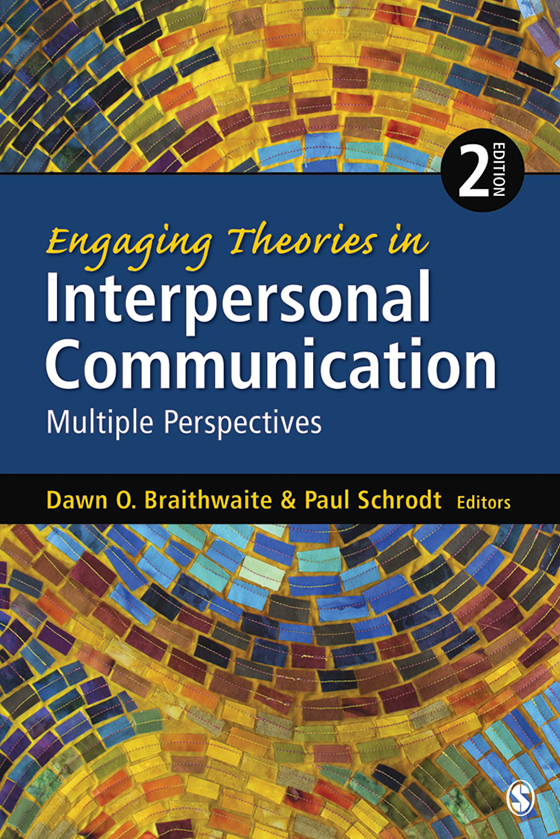

Engaging Theories in Interpersonal Communication
Multiple Perspectives
October 2014 | 472 pages | Sage US
| Format | Published Date | ISBN | Price |
|---|
Winner of the 2017 NCA Gerald R. Miller Book Award!
Use and Understand Interpersonal Communication Theories
Engaging Theories in Interpersonal Communication: Multiple Perspectives highlights key theories used to guide interpersonal communication research. The Second Edition features 30 theory chapters written by leading scholars in interpersonal communication, including new coverage of evolutionary theories, Problematic Integration Theory, supportive communication theories, Theory of Motivated Information Management, critical approaches to interpersonal communication, and Media Multiplexity Theory. Each theory chapter follows the same structure to help readers easily find and compare information across theories. An updated introductory chapter maps the history and the current state of interpersonal communication theory since publication of the first edition, based on comprehensive analysis of published scholarship. Presenting both classic and cutting-edge issues, the book organizes theories into three clusters—theories that are individually-centered; theories that are focused on discourse and interaction processes; and theories that examine how communication functions in personal relationships. All authors interweave abstract theoretical concepts with concrete examples in order to maximize readability and comprehension.
Use and Understand Interpersonal Communication Theories
Engaging Theories in Interpersonal Communication: Multiple Perspectives highlights key theories used to guide interpersonal communication research. The Second Edition features 30 theory chapters written by leading scholars in interpersonal communication, including new coverage of evolutionary theories, Problematic Integration Theory, supportive communication theories, Theory of Motivated Information Management, critical approaches to interpersonal communication, and Media Multiplexity Theory. Each theory chapter follows the same structure to help readers easily find and compare information across theories. An updated introductory chapter maps the history and the current state of interpersonal communication theory since publication of the first edition, based on comprehensive analysis of published scholarship. Presenting both classic and cutting-edge issues, the book organizes theories into three clusters—theories that are individually-centered; theories that are focused on discourse and interaction processes; and theories that examine how communication functions in personal relationships. All authors interweave abstract theoretical concepts with concrete examples in order to maximize readability and comprehension.
Table Of Contents:
- Introduction: Meta-Theory and Theory in Interpersonal Communication Research
- PART I: Individually Centered Theories of Interpersonal Communication
- Action Assembly Theory: Forces of Creation
- Attribution Theory: Finding Good Cause in the Search for Theory
- Evolutionary Theories: Explaining the Links Between Biology and Interpersonal Communication
- Goals-Plans-Action Theory of Message Production: Making Influence Messages
- Imagined Interaction Theory: Mental Representations of Interpersonal Communication
- Planning Theory of Communication: Goal Attainment Through Communicative Action
- Problematic Integration Theory and Uncertainty Management Theory: Learning to Hear and Speak to Different Forms of Uncertainty
- Relational Framing Theory: Drawing Inferences About Relationships From Interpersonal Interactions
- Supportive Communication Theories: Dual-Process Theory of Supportive Message Outcomes and Advice Response Theory
- Theory of Motivated Information Management: Struggles With Uncertainty and Its Outcomes
- PART II: Discourse/Interaction-Centered Theories of Interpersonal Communication
- Communication Accommodation Theory: A Situated Framework for Relational, Family, and Intergroup Dynamics
- Communication Theory of Identity: Multilayered Understandings of Performed Identities
- Critical Approaches to Interpersonal Communication: Charting a Future
- Critical Feminist Theories: Giving Voice and Visibility to Women’s Experiences in Interpersonal Relations
- Expectancy Violations Theory and Interaction Adaptation Theory: From Expectations to Adaptation
- Face Theory: Goffman’s Dramatistic Approach to Interpersonal Interaction
- Grounded Practical Theory: Theorizing Communicative Practices
- Narrative Theories: Making Sense of Interpersonal Communication
- Politeness Theory: How We Use Language to Save Face
- Relational Dialectics Theory: Navigating Meaning From Competing Discourses
- Speech Codes Theory: Traces of Culture in Interpersonal Communication
- PART III: Relationship-Centered Theories of Interpersonal Communication
- Affection Exchange Theory: A Bio-Evolutionary Look at Affectionate Communication
- Attachment Theory: A Communication Perspective
- Communication Privacy Management Theory: Significance for Interpersonal Communication
- Interpersonal Deception Theory: Purposive and Interdependent Behavior During Deceptive Interpersonal Interactions
- Media Multiplexity Theory: Technology Use and Interpersonal Tie Strength
- The Relational Turbulence Model: Communicating During Times of Transition
- Stage Theories of Relationship Development: Charting the Course of Interpersonal Communication
- Social Exchange Theories: Calculating the Rewards and Costs of Personal Relationships
- Social Information Processing Theory: Impressions and Relationship Development Online
Recent Product Reviews:
Great overview of theory and I really appreciate organizational structure. Wish there were some instructor's resources to accompany this title
Dr Sheryl Hurner, Communication Studies, California St Univ-Sacramento
"A highly beneficial contribution to the field with chapters that are clear and concise and illuminate the interesting and important aspects of interpersonal communication. With each chapter students are informed about the components of the theory and are also provided with examples that they can relate to, which really brings these theories to life."
Rene Dailey, University of Texas at Austin
"love this book for its insight, organization, and inclusiveness. I like that the authors use specific examples and then apply their theory to the examples for illustration-this is how students begin to learn how to use and understand theories. What an accessible, thorough, and user-friendly book."
Maureen P. Keeley, Texas State University-San Marcos
"This book is clearly needed as our discipline is advancing almost exponentially in the area of theory and theory development. For so long we have relied, in whole or part, on the theories of other disciplines and consequently fragmented "readings." For students, this book provides an interpersonal link to what we've borrowed in the past and presents future implications of how we might take the current theoretical developments and use them to further test the respective theories or to guide subsequent research."
Clark D. Olson, Arizona State
"Useful, thorough examination of interpersonal theories that will help my students apply theory competently to their own experience."
Leanne Pupchek, Queens University of Charlotte