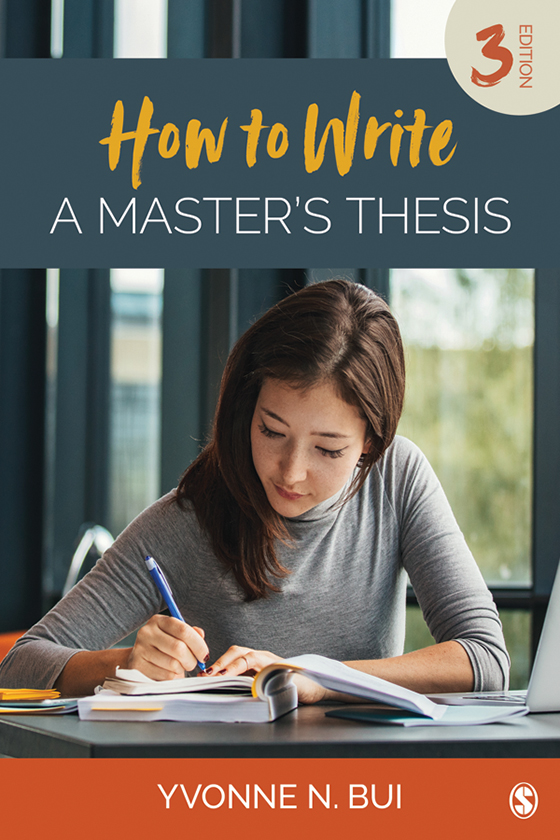
How to Write a Master's Thesis
Third Edition
If you’re in North America, please visit our Sage College Publishing website to purchase or sample this book:
Go to College Publishing WebsiteDescription
“This is the best textbook about writing an M.A. thesis available in the market.”
–Hsin-I Liu, University of the Incarnate Word
The Third Edition of How to Write a Master's Thesis is a comprehensive manual on how to plan and write a five-chapter master’s thesis, and a great resource for graduate students looking for concrete, applied guidance on how to successfully complete their master's degrees. While research methods and statistics courses may teach students the basic information on how to conduct research, putting it all together into a single project and document can be a challenge. Author Yvonne Bui demystifies this process by integrating the language learned in prerequisite methods and statistics courses into a step-by-step guide for developing a student's own thesis or project.
–Hsin-I Liu, University of the Incarnate Word
The Third Edition of How to Write a Master's Thesis is a comprehensive manual on how to plan and write a five-chapter master’s thesis, and a great resource for graduate students looking for concrete, applied guidance on how to successfully complete their master's degrees. While research methods and statistics courses may teach students the basic information on how to conduct research, putting it all together into a single project and document can be a challenge. Author Yvonne Bui demystifies this process by integrating the language learned in prerequisite methods and statistics courses into a step-by-step guide for developing a student's own thesis or project.
Contents
List of Students’ Master’s Theses
List of Students’ Master’s Theses
Preface
Preface
About the Author
- Chapter 1. Overview of the Master’s Degree and Thesis
- The Master’s Degree
- What Is a Master’s Thesis?
- Selecting a Thesis Chairperson and Committee
- How to Read and Use This Book
- Components of a Master’s Thesis
- Quantitative, Qualitative, or Mixed Methods Research?
- Style Form
- Summary
- Resources
- Chapter 2. Selecting a Research Topic
- Important Factors to Consider When Selecting a Topic
- How to Narrow and Refocus Your Topic
- Developing Answerable Research Questions
- Creating a Realistic Timeline
- Time Management
- Summary
- Resources
- Chapter 3. Using the Literature to Research Your Problem
- Benefits of Conducting a Literature Review
- Meeting With a Reference Librarian
- Sources of Data: Primary Versus Secondary
- Selecting Keywords
- Conducting Searches in Electronic Databases
- Conducting Searches on the Internet
- Different Types of Articles
- Staying Organized
- Summary
- Resources
- Chapter 4. Conducting Ethical Research
- Legal Regulations and Ethical Standards
- Institutional Review Board (IRB)
- Ethical Behavior
- Summary
- Resources
- Chapter 5. How to Write Chapter One, Introduction
- Writing Style
- Chapter One Sections
- Summary
- Resources
- Chapter 6. How to Write Chapter Two, Literature Review
- Preparation and Organization
- Chapter Two Sections
- Summary
- Resources
- Chapter 7. How to Write Chapter Three, Methods
- Research Designs and Research Methods
- Preparation and Organization
- Chapter Three Sections
- Summary
- Resources
- Chapter 8. How to Write Chapter Four, Results and Findings
- Preparation and Organization
- Chapter Four Sections
- Quantitative Data
- Qualitative Data
- Mixed Methods Data
- Summary
- Resources
- Chapter 9. How to Write Chapter Five, Discussion
- Preparation and Organization
- Chapter Five Sections
- Summary
- Resources
- Chapter 10. Wrapping It All Up
- Preparation and Organization
- APA Style
- Next Steps: Presenting at Conferences and Getting Published
- Summary
- Resources
Appendices
Appendices
Glossary
Glossary
References
References
Author Index
Author Index
Subject Index
Subject Index
Description
“This is the best textbook about writing an M.A. thesis available in the market.”
–Hsin-I Liu, University of the Incarnate Word
The Third Edition of How to Write a Master's Thesis is a comprehensive manual on how to plan and write a five-chapter master’s thesis, and a great resource for graduate students looking for concrete, applied guidance on how to successfully complete their master's degrees. While research methods and statistics courses may teach students the basic information on how to conduct research, putting it all together into a single project and document can be a challenge. Author Yvonne Bui demystifies this process by integrating the language learned in prerequisite methods and statistics courses into a step-by-step guide for developing a student's own thesis or project.
–Hsin-I Liu, University of the Incarnate Word
The Third Edition of How to Write a Master's Thesis is a comprehensive manual on how to plan and write a five-chapter master’s thesis, and a great resource for graduate students looking for concrete, applied guidance on how to successfully complete their master's degrees. While research methods and statistics courses may teach students the basic information on how to conduct research, putting it all together into a single project and document can be a challenge. Author Yvonne Bui demystifies this process by integrating the language learned in prerequisite methods and statistics courses into a step-by-step guide for developing a student's own thesis or project.
Contents
List of Students’ Master’s Theses
List of Students’ Master’s Theses
Preface
Preface
About the Author
- Chapter 1. Overview of the Master’s Degree and Thesis
- The Master’s Degree
- What Is a Master’s Thesis?
- Selecting a Thesis Chairperson and Committee
- How to Read and Use This Book
- Components of a Master’s Thesis
- Quantitative, Qualitative, or Mixed Methods Research?
- Style Form
- Summary
- Resources
- Chapter 2. Selecting a Research Topic
- Important Factors to Consider When Selecting a Topic
- How to Narrow and Refocus Your Topic
- Developing Answerable Research Questions
- Creating a Realistic Timeline
- Time Management
- Summary
- Resources
- Chapter 3. Using the Literature to Research Your Problem
- Benefits of Conducting a Literature Review
- Meeting With a Reference Librarian
- Sources of Data: Primary Versus Secondary
- Selecting Keywords
- Conducting Searches in Electronic Databases
- Conducting Searches on the Internet
- Different Types of Articles
- Staying Organized
- Summary
- Resources
- Chapter 4. Conducting Ethical Research
- Legal Regulations and Ethical Standards
- Institutional Review Board (IRB)
- Ethical Behavior
- Summary
- Resources
- Chapter 5. How to Write Chapter One, Introduction
- Writing Style
- Chapter One Sections
- Summary
- Resources
- Chapter 6. How to Write Chapter Two, Literature Review
- Preparation and Organization
- Chapter Two Sections
- Summary
- Resources
- Chapter 7. How to Write Chapter Three, Methods
- Research Designs and Research Methods
- Preparation and Organization
- Chapter Three Sections
- Summary
- Resources
- Chapter 8. How to Write Chapter Four, Results and Findings
- Preparation and Organization
- Chapter Four Sections
- Quantitative Data
- Qualitative Data
- Mixed Methods Data
- Summary
- Resources
- Chapter 9. How to Write Chapter Five, Discussion
- Preparation and Organization
- Chapter Five Sections
- Summary
- Resources
- Chapter 10. Wrapping It All Up
- Preparation and Organization
- APA Style
- Next Steps: Presenting at Conferences and Getting Published
- Summary
- Resources
Appendices
Appendices
Glossary
Glossary
References
References
Author Index
Author Index
Subject Index
Subject Index
Reviews

August 2019 | 320 pages | Sage US
| Format | Published Date | ISBN | Price |
|---|
“This is the best textbook about writing an M.A. thesis available in the market.”
–Hsin-I Liu, University of the Incarnate Word
The Third Edition of How to Write a Master's Thesis is a comprehensive manual on how to plan and write a five-chapter master’s thesis, and a great resource for graduate students looking for concrete, applied guidance on how to successfully complete their master's degrees. While research methods and statistics courses may teach students the basic information on how to conduct research, putting it all together into a single project and document can be a challenge. Author Yvonne Bui demystifies this process by integrating the language learned in prerequisite methods and statistics courses into a step-by-step guide for developing a student's own thesis or project.
–Hsin-I Liu, University of the Incarnate Word
The Third Edition of How to Write a Master's Thesis is a comprehensive manual on how to plan and write a five-chapter master’s thesis, and a great resource for graduate students looking for concrete, applied guidance on how to successfully complete their master's degrees. While research methods and statistics courses may teach students the basic information on how to conduct research, putting it all together into a single project and document can be a challenge. Author Yvonne Bui demystifies this process by integrating the language learned in prerequisite methods and statistics courses into a step-by-step guide for developing a student's own thesis or project.
Table Of Contents:
- List of Students’ Master’s Theses
- Preface
- About the Author
- Chapter 1. Overview of the Master’s Degree and Thesis
- The Master’s Degree
- What Is a Master’s Thesis?
- Selecting a Thesis Chairperson and Committee
- How to Read and Use This Book
- Components of a Master’s Thesis
- Quantitative, Qualitative, or Mixed Methods Research?
- Style Form
- Summary
- Resources
- Chapter 2. Selecting a Research Topic
- Important Factors to Consider When Selecting a Topic
- How to Narrow and Refocus Your Topic
- Developing Answerable Research Questions
- Creating a Realistic Timeline
- Time Management
- Summary
- Resources
- Chapter 3. Using the Literature to Research Your Problem
- Benefits of Conducting a Literature Review
- Meeting With a Reference Librarian
- Sources of Data: Primary Versus Secondary
- Selecting Keywords
- Conducting Searches in Electronic Databases
- Conducting Searches on the Internet
- Different Types of Articles
- Staying Organized
- Summary
- Resources
- Chapter 4. Conducting Ethical Research
- Legal Regulations and Ethical Standards
- Institutional Review Board (IRB)
- Ethical Behavior
- Summary
- Resources
- Chapter 5. How to Write Chapter One, Introduction
- Writing Style
- Chapter One Sections
- Summary
- Resources
- Chapter 6. How to Write Chapter Two, Literature Review
- Preparation and Organization
- Chapter Two Sections
- Summary
- Resources
- Chapter 7. How to Write Chapter Three, Methods
- Research Designs and Research Methods
- Preparation and Organization
- Chapter Three Sections
- Summary
- Resources
- Chapter 8. How to Write Chapter Four, Results and Findings
- Preparation and Organization
- Chapter Four Sections
- Quantitative Data
- Qualitative Data
- Mixed Methods Data
- Summary
- Resources
- Chapter 9. How to Write Chapter Five, Discussion
- Preparation and Organization
- Chapter Five Sections
- Summary
- Resources
- Chapter 10. Wrapping It All Up
- Preparation and Organization
- APA Style
- Next Steps: Presenting at Conferences and Getting Published
- Summary
- Resources
- Appendices
- Glossary
- References
- Author Index
- Subject Index
Recent Product Reviews:
“Yvonne Bui’s How to Write a Master’s Thesis should be mandatory for all thesis track master’s students. It steers students away from the shortcuts students may be tempted to use that would be costly in the long run. The step by step intentional approach is what I like best about this book.”
Joel M. Cox, Liberty University
“This is the best textbook about writing an M.A. thesis available in the market.”
Hsin-I Liu, University of the Incarnate Word
“This is the type of textbook that students keep and refer to after the class.”
Elizabeth Tolman, South Dakota State University