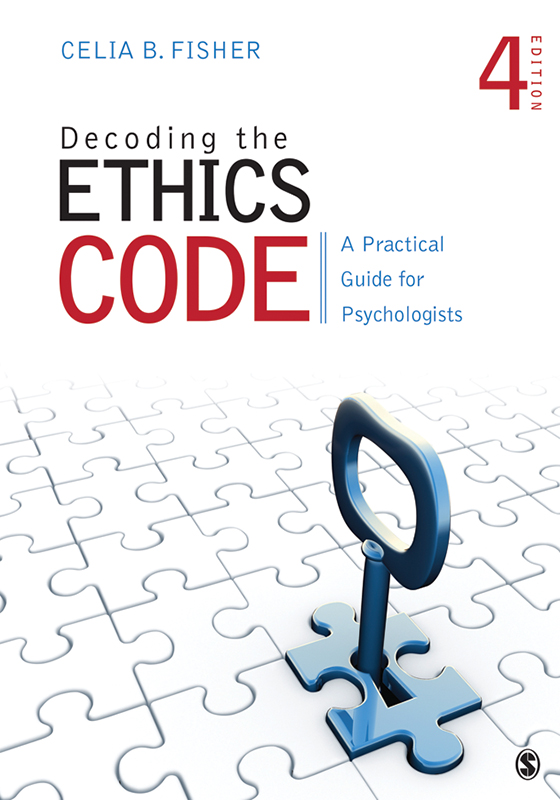
Decoding the Ethics Code

Unfortunately, this book can't be purchased from your location. Please browse our other books and resources.
Browse Other BooksPart I: Introduction and Background
- Chapter 1: A Code of Ethics for Psychology: How Did We Get Here?
- Beginnings
- The 2010 Amendments: The Controversy Over Psychologists’ Involvement in Inhumane Military Interrogations
- Format and Distinctive Features of the APA Ethics Code
- Chapter 2: The Introduction and Applicability Section, Preamble, and General Principles: What Do They Mean?
- Understanding the Introduction and Applicability Section and the Preamble
- What Is the Relevance of Specific Language Used in the Ethics Code?
- How Is the Ethics Code Related to APA Ethics Enforcement?
- How Is the Ethics Code Related to Sanctions by Other Bodies?
- How Is the APA Ethics Code Related to Law?
- General Principles
- Chapter 3: The APA Ethics Code and Ethical Decision Making
- Ethical Commitment and Virtues
- Ethical Awareness and Moral Principles
- Ethical Awareness and Ethical Theories
- Ethical Absolutism, Ethical Relativism, and Ethical Contextualism
- Ethical Competence
- Steps in Ethical Decision Making
- Doing Good Well
Part II. Enforceable Standards
- Chapter 4: Standards for Resolving Ethical Issues
- 1. Resolving Ethical Issues
- Chapter 5: Standards on Competence
- 2. Competence
- Chapter 6: Standards on Human Relations
- 3. Human Relations
- Chapter 7: Standards on Privacy and Confidentiality
- 4. Privacy and Confidentiality
- Chapter 8: Standards on Advertising and Other Public Statements
- 5. Advertising and Other Public Statements
- Chapter 9: Standards on Record Keeping and Fees
- 6. Record Keeping and Fees
- Chapter 10: Standards on Education and Training
- 7. Education and Training
- Chapter 11: Standards on Research and Publication
- 8. Research And Publication
- Chapter 12: Standards on Assessment
- 9. Assessment
- Chapter 13: Standards on Therapy
- 10. Therapy
- Appendix A: Case Studies for Ethical Decision Making
Instructor Teaching Site
Calling all instructors!
It’s easy to log on to SAGE’s password-protected Instructor Teaching Site at http://study.sagepub.com/fisher4e for complete and protected access to all text-specific Instructor Resources for Fisher, Decoding the Ethics Code 4e. Simply provide your institutional information for verification and within 72 hours you’ll be able to use your login information for any SAGE title!
- A Microsoft® Word® test bank is available containing multiple choice, true/false, short answer, and essay questions for each chapter. The test bank provides you with a diverse range of pre-written options as well as the opportunity for editing any question and/or inserting your own personalized questions to effectively assess students’ progress and understanding.
- Editable, chapter-specific Microsoft® PowerPoint® slides offer you complete flexibility in easily creating a multimedia presentation for your course. Highlight essential content and features.
Student Resources
https://study.sagepub.com/fisher4ePart I: Introduction and Background
- Chapter 1: A Code of Ethics for Psychology: How Did We Get Here?
- Beginnings
- The 2010 Amendments: The Controversy Over Psychologists’ Involvement in Inhumane Military Interrogations
- Format and Distinctive Features of the APA Ethics Code
- Chapter 2: The Introduction and Applicability Section, Preamble, and General Principles: What Do They Mean?
- Understanding the Introduction and Applicability Section and the Preamble
- What Is the Relevance of Specific Language Used in the Ethics Code?
- How Is the Ethics Code Related to APA Ethics Enforcement?
- How Is the Ethics Code Related to Sanctions by Other Bodies?
- How Is the APA Ethics Code Related to Law?
- General Principles
- Chapter 3: The APA Ethics Code and Ethical Decision Making
- Ethical Commitment and Virtues
- Ethical Awareness and Moral Principles
- Ethical Awareness and Ethical Theories
- Ethical Absolutism, Ethical Relativism, and Ethical Contextualism
- Ethical Competence
- Steps in Ethical Decision Making
- Doing Good Well
Part II. Enforceable Standards
- Chapter 4: Standards for Resolving Ethical Issues
- 1. Resolving Ethical Issues
- Chapter 5: Standards on Competence
- 2. Competence
- Chapter 6: Standards on Human Relations
- 3. Human Relations
- Chapter 7: Standards on Privacy and Confidentiality
- 4. Privacy and Confidentiality
- Chapter 8: Standards on Advertising and Other Public Statements
- 5. Advertising and Other Public Statements
- Chapter 9: Standards on Record Keeping and Fees
- 6. Record Keeping and Fees
- Chapter 10: Standards on Education and Training
- 7. Education and Training
- Chapter 11: Standards on Research and Publication
- 8. Research And Publication
- Chapter 12: Standards on Assessment
- 9. Assessment
- Chapter 13: Standards on Therapy
- 10. Therapy
- Appendix A: Case Studies for Ethical Decision Making
Instructor Teaching Site
Calling all instructors!
It’s easy to log on to SAGE’s password-protected Instructor Teaching Site at http://study.sagepub.com/fisher4e for complete and protected access to all text-specific Instructor Resources for Fisher, Decoding the Ethics Code 4e. Simply provide your institutional information for verification and within 72 hours you’ll be able to use your login information for any SAGE title!
- A Microsoft® Word® test bank is available containing multiple choice, true/false, short answer, and essay questions for each chapter. The test bank provides you with a diverse range of pre-written options as well as the opportunity for editing any question and/or inserting your own personalized questions to effectively assess students’ progress and understanding.
- Editable, chapter-specific Microsoft® PowerPoint® slides offer you complete flexibility in easily creating a multimedia presentation for your course. Highlight essential content and features.
Student Resources
https://study.sagepub.com/fisher4eReviews

April 2016 | 568 pages | Sage US
| Format | Published Date | ISBN | Price |
|---|
Table Of Contents:
- Part I: Introduction and Background
- Chapter 1: A Code of Ethics for Psychology: How Did We Get Here?
- Beginnings
- The 2010 Amendments: The Controversy Over Psychologists’ Involvement in Inhumane Military Interrogations
- Format and Distinctive Features of the APA Ethics Code
- Chapter 2: The Introduction and Applicability Section, Preamble, and General Principles: What Do They Mean?
- Understanding the Introduction and Applicability Section and the Preamble
- What Is the Relevance of Specific Language Used in the Ethics Code?
- How Is the Ethics Code Related to APA Ethics Enforcement?
- How Is the Ethics Code Related to Sanctions by Other Bodies?
- How Is the APA Ethics Code Related to Law?
- General Principles
- Chapter 3: The APA Ethics Code and Ethical Decision Making
- Ethical Commitment and Virtues
- Ethical Awareness and Moral Principles
- Ethical Awareness and Ethical Theories
- Ethical Absolutism, Ethical Relativism, and Ethical Contextualism
- Ethical Competence
- Steps in Ethical Decision Making
- Doing Good Well
- Part II. Enforceable Standards
- Chapter 4: Standards for Resolving Ethical Issues
- 1. Resolving Ethical Issues
- Chapter 5: Standards on Competence
- 2. Competence
- Chapter 6: Standards on Human Relations
- 3. Human Relations
- Chapter 7: Standards on Privacy and Confidentiality
- 4. Privacy and Confidentiality
- Chapter 8: Standards on Advertising and Other Public Statements
- 5. Advertising and Other Public Statements
- Chapter 9: Standards on Record Keeping and Fees
- 6. Record Keeping and Fees
- Chapter 10: Standards on Education and Training
- 7. Education and Training
- Chapter 11: Standards on Research and Publication
- 8. Research And Publication
- Chapter 12: Standards on Assessment
- 9. Assessment
- Chapter 13: Standards on Therapy
- 10. Therapy
- Appendix A: Case Studies for Ethical Decision Making