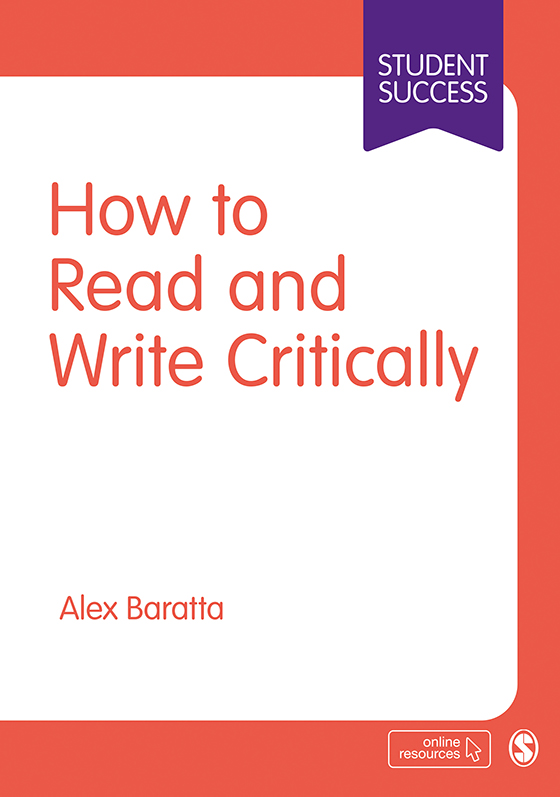
How to Read and Write Critically
If you’re in North America, please visit our Sage College Publishing website to purchase or sample this book:
Go to College Publishing WebsiteDescription
To succeed in any assessment, you need to demonstrate critical thinking – but what does it mean to be ‘critical’?
This book takes a hands-on approach to helping you think, read and write critically. Packed with examples from different disciplines and subjects, it talks through dozens of written extracts so you can see what criticality actually looks like.
The book:
· Equips you with tools for making an argument, explaining your reasoning and using examples to illustrate your points.
· Enables you to structure coherent arguments and choose appropriate language.
· Helps you interpret and apply feedback from your lecturers.
For undergraduate students studying in any discipline, this clear guide takes the confusion out of reading and writing critically so you can approach your assessments with confidence.
Student Success is a series of essential guides for students of all levels. From how to think critically and write great essays to boosting your employability and managing your wellbeing, the Student Success series helps you study smarter and get the best from your time at university.
Contents
Chapter 1: What does it mean to be ‘critical’?
Chapter 1: What does it mean to be ‘critical’?
Chapter 2: Different ways to show your criticality
Chapter 2: Different ways to show your criticality
Chapter 3: Understanding score bands and developing your skills within academic assessment
Chapter 3: Understanding score bands and developing your skills within academic assessment
Chapter 4: The connection between critical reading, thinking and writing
Chapter 4: The connection between critical reading, thinking and writing
Chapter 5: How to structure your essays
Chapter 5: How to structure your essays
Chapter 6: How to structure your dissertation
Chapter 6: How to structure your dissertation
Chapter 7: Additional assessments to consider
Chapter 7: Additional assessments to consider
Chapter 8: Four ways to approach interpretation
Chapter 8: Four ways to approach interpretation
Chapter 9: How to use quotes, paraphrase and summarise
Chapter 9: How to use quotes, paraphrase and summarise
Chapter 10: How to use critical language in your assessments
Chapter 10: How to use critical language in your assessments
Additional materials
Description
To succeed in any assessment, you need to demonstrate critical thinking – but what does it mean to be ‘critical’?
This book takes a hands-on approach to helping you think, read and write critically. Packed with examples from different disciplines and subjects, it talks through dozens of written extracts so you can see what criticality actually looks like.
The book:
· Equips you with tools for making an argument, explaining your reasoning and using examples to illustrate your points.
· Enables you to structure coherent arguments and choose appropriate language.
· Helps you interpret and apply feedback from your lecturers.
For undergraduate students studying in any discipline, this clear guide takes the confusion out of reading and writing critically so you can approach your assessments with confidence.
Student Success is a series of essential guides for students of all levels. From how to think critically and write great essays to boosting your employability and managing your wellbeing, the Student Success series helps you study smarter and get the best from your time at university.
Contents
Chapter 1: What does it mean to be ‘critical’?
Chapter 1: What does it mean to be ‘critical’?
Chapter 2: Different ways to show your criticality
Chapter 2: Different ways to show your criticality
Chapter 3: Understanding score bands and developing your skills within academic assessment
Chapter 3: Understanding score bands and developing your skills within academic assessment
Chapter 4: The connection between critical reading, thinking and writing
Chapter 4: The connection between critical reading, thinking and writing
Chapter 5: How to structure your essays
Chapter 5: How to structure your essays
Chapter 6: How to structure your dissertation
Chapter 6: How to structure your dissertation
Chapter 7: Additional assessments to consider
Chapter 7: Additional assessments to consider
Chapter 8: Four ways to approach interpretation
Chapter 8: Four ways to approach interpretation
Chapter 9: How to use quotes, paraphrase and summarise
Chapter 9: How to use quotes, paraphrase and summarise
Chapter 10: How to use critical language in your assessments
Chapter 10: How to use critical language in your assessments
Additional materials
Reviews

September 2021 | 224 pages | Sage UK
| Format | Published Date | ISBN | Price |
|---|
To succeed in any assessment, you need to demonstrate critical thinking – but what does it mean to be ‘critical’?
This book takes a hands-on approach to helping you think, read and write critically. Packed with examples from different disciplines and subjects, it talks through dozens of written extracts so you can see what criticality actually looks like.
The book:
· Equips you with tools for making an argument, explaining your reasoning and using examples to illustrate your points.
· Enables you to structure coherent arguments and choose appropriate language.
· Helps you interpret and apply feedback from your lecturers.
For undergraduate students studying in any discipline, this clear guide takes the confusion out of reading and writing critically so you can approach your assessments with confidence.
Student Success is a series of essential guides for students of all levels. From how to think critically and write great essays to boosting your employability and managing your wellbeing, the Student Success series helps you study smarter and get the best from your time at university.
Table Of Contents:
- Chapter 1: What does it mean to be ‘critical’?
- Chapter 2: Different ways to show your criticality
- Chapter 3: Understanding score bands and developing your skills within academic assessment
- Chapter 4: The connection between critical reading, thinking and writing
- Chapter 5: How to structure your essays
- Chapter 6: How to structure your dissertation
- Chapter 7: Additional assessments to consider
- Chapter 8: Four ways to approach interpretation
- Chapter 9: How to use quotes, paraphrase and summarise
- Chapter 10: How to use critical language in your assessments