Program Evaluation

Unfortunately, this book can't be purchased from your location. Please browse our other books and resources.
Browse Other BooksProgram Evaluation: Embedding Evaluation into Program Design and Development provides an in-depth examination of the foundations, methods, and relevant issues in the field of evaluation. With an emphasis on an embedded approach, where evaluation is an explicit part of a program that leads to the refinement of the program, students will learn how to conduct effective evaluations that foster continual improvement and enable data-based decision making. This text provides students with both the theoretical understanding and the practical tools to conduct effective evaluations while being rigorous enough for experienced evaluators looking to expand their approach to evaluation.
An Instructor website to accompany this book is available at: study.sagepub.com/giancola1e
Acknowledgments
Acknowledgments
Preface
Preface
About the Author
About the Author
SECTION I • INTRODUCTION
- Chapter 1 • Evaluation Matters
- 1.1 What Is Evaluation?
- 1.2 Why Evaluate?
- 1.3 Values and Standards in Evaluation
- 1.4 Types of Evaluation
- 1.5 Internal and External Evaluation
- 1.6 Embedding Evaluation Into Programs
- 1.7 Textbook Organization
- 1.8 Chapter Summary
- Reflection and Application
- Chapter 2 • History of Evaluation
- 2.1 The Evolution of Evaluation
- 2.2 The History of Ethics in Research and Evaluation
- 2.3 Current Issues in Evaluation
- 2.4 Chapter Summary
- Reflection and Application
- Chapter 3 • Evaluation Ethics
- 3.1 Ethics Defined
- 3.2 Research Ethics Guidelines and Legislation
- 3.3 IRB Protocols and Amendments
- 3.4 Ethical Responsibilities of Organizations
- 3.5 Ethical Responsibilities of Evaluators
- 3.6 Additional Considerations
- 3.7 Chapter Summary
- Reflection and Application
- Chapter 4 • Evaluation Ideologies and Approaches
- 4.1 Inquiry and Ideology
- 4.2 Evaluation Ideology
- 4.3 Evaluation Design
- 4.4 Evaluation Approach
- 4.5 Embedded Evaluation
- 4.6 Chapter Summary
- Reflection and Application
SECTION II • EMBEDDED EVALUATION: DESIGN
- Chapter 5 • DEFINE, Part 1: Understanding the Program
- 5.1 Embedded Evaluation
- 5.2 Understanding the Program
- 5.3 Delineating Goals and Strategies
- 5.4 Explaining the Program Theory
- 5.5 Determining Contextual Conditions
- 5.6 Program Theory and Other Theories
- 5.7 Considering Alternative Theories
- 5.8 Chapter Summary
- Reflection and Application
- Chapter 6 • DEFINE, Part 2: Modeling the Program
- 6.1 Chapter in Context
- 6.2 What Is a Logic Model?
- 6.3 Creating the Logic Model
- 6.4 Using the Program’s Logic Model
- 6.5 More on Logic Models
- 6.6 Chapter Summary
- Reflection and Application
- Chapter 7 • PLAN, Part 1: Planning the Evaluation
- 7.1 Creating Evaluation Questions
- 7.2 Embedding Evaluation Questions Into Your Logic Model
- 7.3 What Data Should I Collect?
- 7.4 Creating the Evaluation Matrix
- 7.5 Chapter Summary
- Reflection and Application
- Chapter 8 • PLAN, Part 2: Designing the Evaluation
- 8.1 Evaluation Design
- 8.2 Evaluation Methods and Tools
- 8.3 Evaluation Matrix: Identifying Data Sources
- 8.4 Chapter Summary
- Reflection and Application
SECTION III • EMBEDDED EVALUATION: IMPLEMENTATION
- Chapter 9 • IMPLEMENT, Part 1: Implementing the Evaluation
- 9.1 Chapter in Context
- 9.2 Informed Consent
- 9.3 Collecting the Data
- 9.4 Organizing Quantitative Data
- 9.5 Organizing Qualitative Data
- 9.6 Chapter Summary
- Reflection and Application
- Chapter 10 • IMPLEMENT, Part 2: Analyzing the Data
- 10.1 Chapter in Context
- 10.2 Quantitative Data Analysis: Descriptive Statistics
- 10.3 Quantitative Data Analysis: Inferential Statistics
- 10.4 Qualitative Data Analysis
- 10.5 Managing the Unexpected and Unintended
- 10.6 Chapter Summary
- Reflection and Application
- Chapter 11 • INTERPRET: Interpreting the Results
- 11.1 The Home Stretch
- 11.2 Examining Results
- 11.3 Interpreting Results
- 11.4 Communicating Evaluation Results
- 11.5 Enhancing Reporting and Communication
- 11.6 Chapter Summary
- Reflection and Application
- Chapter 12 • INFORM and REFINE: Using Evaluation Results
- 12.1 Purpose of Evaluation
- 12.2 Pre-Evaluation: Efforts to Promote Utilization
- 12.3 During Evaluation: Ongoing Utilization Efforts
- 12.4 Post-Evaluation and Data Dissemination
- 12.5 Chapter Summary
- Reflection and Application
SECTION IV • RESOURCES
- Chapter 13 • Case Study Applications
- 13.1 LEND Evaluation
- 13.2 ACCEL Evaluation
- 13.3 YAP Evaluation
Appendices: Special Topics
Appendices: Special Topics
Appendix A: Needs Assessment
Appendix A: Needs Assessment
Appendix B: Politics and Policy
Appendix B: Politics and Policy
Appendix C: Developmental Evaluation
Appendix C: Developmental Evaluation
Appendix D: Translational Research Evaluation
Appendix D: Translational Research Evaluation
Glossary
Glossary
References
References
Index
Index
Instructor Teaching Site
Password-protected Instructor Resources include the following:
- Editable, chapter-specific Microsoft® PowerPoint® slides offer you complete flexibility in easily creating a multimedia presentation for your course.
- Lecture Notes, including Outline and Objectives, which may be used for lecture and/or student handouts.
- A Sample Syllabus provides a suggested course model for using the book.
- Assignments and a semester-long course project are available for download, along with grading rubrics.
- Full-text case studies and journal articles are accompanied by critical thinking/discussion questions.
- Tables and figures from the printed book are available in an easily-downloadable format for use in papers, hand-outs, and presentations.
Program Evaluation: Embedding Evaluation into Program Design and Development provides an in-depth examination of the foundations, methods, and relevant issues in the field of evaluation. With an emphasis on an embedded approach, where evaluation is an explicit part of a program that leads to the refinement of the program, students will learn how to conduct effective evaluations that foster continual improvement and enable data-based decision making. This text provides students with both the theoretical understanding and the practical tools to conduct effective evaluations while being rigorous enough for experienced evaluators looking to expand their approach to evaluation.
An Instructor website to accompany this book is available at: study.sagepub.com/giancola1e
Acknowledgments
Acknowledgments
Preface
Preface
About the Author
About the Author
SECTION I • INTRODUCTION
- Chapter 1 • Evaluation Matters
- 1.1 What Is Evaluation?
- 1.2 Why Evaluate?
- 1.3 Values and Standards in Evaluation
- 1.4 Types of Evaluation
- 1.5 Internal and External Evaluation
- 1.6 Embedding Evaluation Into Programs
- 1.7 Textbook Organization
- 1.8 Chapter Summary
- Reflection and Application
- Chapter 2 • History of Evaluation
- 2.1 The Evolution of Evaluation
- 2.2 The History of Ethics in Research and Evaluation
- 2.3 Current Issues in Evaluation
- 2.4 Chapter Summary
- Reflection and Application
- Chapter 3 • Evaluation Ethics
- 3.1 Ethics Defined
- 3.2 Research Ethics Guidelines and Legislation
- 3.3 IRB Protocols and Amendments
- 3.4 Ethical Responsibilities of Organizations
- 3.5 Ethical Responsibilities of Evaluators
- 3.6 Additional Considerations
- 3.7 Chapter Summary
- Reflection and Application
- Chapter 4 • Evaluation Ideologies and Approaches
- 4.1 Inquiry and Ideology
- 4.2 Evaluation Ideology
- 4.3 Evaluation Design
- 4.4 Evaluation Approach
- 4.5 Embedded Evaluation
- 4.6 Chapter Summary
- Reflection and Application
SECTION II • EMBEDDED EVALUATION: DESIGN
- Chapter 5 • DEFINE, Part 1: Understanding the Program
- 5.1 Embedded Evaluation
- 5.2 Understanding the Program
- 5.3 Delineating Goals and Strategies
- 5.4 Explaining the Program Theory
- 5.5 Determining Contextual Conditions
- 5.6 Program Theory and Other Theories
- 5.7 Considering Alternative Theories
- 5.8 Chapter Summary
- Reflection and Application
- Chapter 6 • DEFINE, Part 2: Modeling the Program
- 6.1 Chapter in Context
- 6.2 What Is a Logic Model?
- 6.3 Creating the Logic Model
- 6.4 Using the Program’s Logic Model
- 6.5 More on Logic Models
- 6.6 Chapter Summary
- Reflection and Application
- Chapter 7 • PLAN, Part 1: Planning the Evaluation
- 7.1 Creating Evaluation Questions
- 7.2 Embedding Evaluation Questions Into Your Logic Model
- 7.3 What Data Should I Collect?
- 7.4 Creating the Evaluation Matrix
- 7.5 Chapter Summary
- Reflection and Application
- Chapter 8 • PLAN, Part 2: Designing the Evaluation
- 8.1 Evaluation Design
- 8.2 Evaluation Methods and Tools
- 8.3 Evaluation Matrix: Identifying Data Sources
- 8.4 Chapter Summary
- Reflection and Application
SECTION III • EMBEDDED EVALUATION: IMPLEMENTATION
- Chapter 9 • IMPLEMENT, Part 1: Implementing the Evaluation
- 9.1 Chapter in Context
- 9.2 Informed Consent
- 9.3 Collecting the Data
- 9.4 Organizing Quantitative Data
- 9.5 Organizing Qualitative Data
- 9.6 Chapter Summary
- Reflection and Application
- Chapter 10 • IMPLEMENT, Part 2: Analyzing the Data
- 10.1 Chapter in Context
- 10.2 Quantitative Data Analysis: Descriptive Statistics
- 10.3 Quantitative Data Analysis: Inferential Statistics
- 10.4 Qualitative Data Analysis
- 10.5 Managing the Unexpected and Unintended
- 10.6 Chapter Summary
- Reflection and Application
- Chapter 11 • INTERPRET: Interpreting the Results
- 11.1 The Home Stretch
- 11.2 Examining Results
- 11.3 Interpreting Results
- 11.4 Communicating Evaluation Results
- 11.5 Enhancing Reporting and Communication
- 11.6 Chapter Summary
- Reflection and Application
- Chapter 12 • INFORM and REFINE: Using Evaluation Results
- 12.1 Purpose of Evaluation
- 12.2 Pre-Evaluation: Efforts to Promote Utilization
- 12.3 During Evaluation: Ongoing Utilization Efforts
- 12.4 Post-Evaluation and Data Dissemination
- 12.5 Chapter Summary
- Reflection and Application
SECTION IV • RESOURCES
- Chapter 13 • Case Study Applications
- 13.1 LEND Evaluation
- 13.2 ACCEL Evaluation
- 13.3 YAP Evaluation
Appendices: Special Topics
Appendices: Special Topics
Appendix A: Needs Assessment
Appendix A: Needs Assessment
Appendix B: Politics and Policy
Appendix B: Politics and Policy
Appendix C: Developmental Evaluation
Appendix C: Developmental Evaluation
Appendix D: Translational Research Evaluation
Appendix D: Translational Research Evaluation
Glossary
Glossary
References
References
Index
Index
Instructor Teaching Site
Password-protected Instructor Resources include the following:
- Editable, chapter-specific Microsoft® PowerPoint® slides offer you complete flexibility in easily creating a multimedia presentation for your course.
- Lecture Notes, including Outline and Objectives, which may be used for lecture and/or student handouts.
- A Sample Syllabus provides a suggested course model for using the book.
- Assignments and a semester-long course project are available for download, along with grading rubrics.
- Full-text case studies and journal articles are accompanied by critical thinking/discussion questions.
- Tables and figures from the printed book are available in an easily-downloadable format for use in papers, hand-outs, and presentations.
Reviews
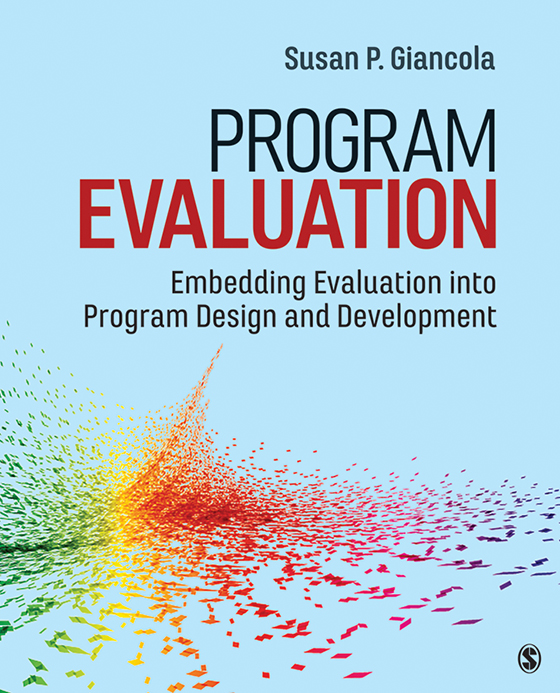

Program Evaluation
Embedding Evaluation into Program Design and Development
January 2020 | 432 pages | Sage US
| Format | Published Date | ISBN | Price |
|---|
Program Evaluation: Embedding Evaluation into Program Design and Development provides an in-depth examination of the foundations, methods, and relevant issues in the field of evaluation. With an emphasis on an embedded approach, where evaluation is an explicit part of a program that leads to the refinement of the program, students will learn how to conduct effective evaluations that foster continual improvement and enable data-based decision making. This text provides students with both the theoretical understanding and the practical tools to conduct effective evaluations while being rigorous enough for experienced evaluators looking to expand their approach to evaluation.
An Instructor website to accompany this book is available at: study.sagepub.com/giancola1e
Table Of Contents:
- Acknowledgments
- Preface
- About the Author
- SECTION I • INTRODUCTION
- Chapter 1 • Evaluation Matters
- 1.1 What Is Evaluation?
- 1.2 Why Evaluate?
- 1.3 Values and Standards in Evaluation
- 1.4 Types of Evaluation
- 1.5 Internal and External Evaluation
- 1.6 Embedding Evaluation Into Programs
- 1.7 Textbook Organization
- 1.8 Chapter Summary
- Reflection and Application
- Chapter 2 • History of Evaluation
- 2.1 The Evolution of Evaluation
- 2.2 The History of Ethics in Research and Evaluation
- 2.3 Current Issues in Evaluation
- 2.4 Chapter Summary
- Reflection and Application
- Chapter 3 • Evaluation Ethics
- 3.1 Ethics Defined
- 3.2 Research Ethics Guidelines and Legislation
- 3.3 IRB Protocols and Amendments
- 3.4 Ethical Responsibilities of Organizations
- 3.5 Ethical Responsibilities of Evaluators
- 3.6 Additional Considerations
- 3.7 Chapter Summary
- Reflection and Application
- Chapter 4 • Evaluation Ideologies and Approaches
- 4.1 Inquiry and Ideology
- 4.2 Evaluation Ideology
- 4.3 Evaluation Design
- 4.4 Evaluation Approach
- 4.5 Embedded Evaluation
- 4.6 Chapter Summary
- Reflection and Application
- SECTION II • EMBEDDED EVALUATION: DESIGN
- Chapter 5 • DEFINE, Part 1: Understanding the Program
- 5.1 Embedded Evaluation
- 5.2 Understanding the Program
- 5.3 Delineating Goals and Strategies
- 5.4 Explaining the Program Theory
- 5.5 Determining Contextual Conditions
- 5.6 Program Theory and Other Theories
- 5.7 Considering Alternative Theories
- 5.8 Chapter Summary
- Reflection and Application
- Chapter 6 • DEFINE, Part 2: Modeling the Program
- 6.1 Chapter in Context
- 6.2 What Is a Logic Model?
- 6.3 Creating the Logic Model
- 6.4 Using the Program’s Logic Model
- 6.5 More on Logic Models
- 6.6 Chapter Summary
- Reflection and Application
- Chapter 7 • PLAN, Part 1: Planning the Evaluation
- 7.1 Creating Evaluation Questions
- 7.2 Embedding Evaluation Questions Into Your Logic Model
- 7.3 What Data Should I Collect?
- 7.4 Creating the Evaluation Matrix
- 7.5 Chapter Summary
- Reflection and Application
- Chapter 8 • PLAN, Part 2: Designing the Evaluation
- 8.1 Evaluation Design
- 8.2 Evaluation Methods and Tools
- 8.3 Evaluation Matrix: Identifying Data Sources
- 8.4 Chapter Summary
- Reflection and Application
- SECTION III • EMBEDDED EVALUATION: IMPLEMENTATION
- Chapter 9 • IMPLEMENT, Part 1: Implementing the Evaluation
- 9.1 Chapter in Context
- 9.2 Informed Consent
- 9.3 Collecting the Data
- 9.4 Organizing Quantitative Data
- 9.5 Organizing Qualitative Data
- 9.6 Chapter Summary
- Reflection and Application
- Chapter 10 • IMPLEMENT, Part 2: Analyzing the Data
- 10.1 Chapter in Context
- 10.2 Quantitative Data Analysis: Descriptive Statistics
- 10.3 Quantitative Data Analysis: Inferential Statistics
- 10.4 Qualitative Data Analysis
- 10.5 Managing the Unexpected and Unintended
- 10.6 Chapter Summary
- Reflection and Application
- Chapter 11 • INTERPRET: Interpreting the Results
- 11.1 The Home Stretch
- 11.2 Examining Results
- 11.3 Interpreting Results
- 11.4 Communicating Evaluation Results
- 11.5 Enhancing Reporting and Communication
- 11.6 Chapter Summary
- Reflection and Application
- Chapter 12 • INFORM and REFINE: Using Evaluation Results
- 12.1 Purpose of Evaluation
- 12.2 Pre-Evaluation: Efforts to Promote Utilization
- 12.3 During Evaluation: Ongoing Utilization Efforts
- 12.4 Post-Evaluation and Data Dissemination
- 12.5 Chapter Summary
- Reflection and Application
- SECTION IV • RESOURCES
- Chapter 13 • Case Study Applications
- 13.1 LEND Evaluation
- 13.2 ACCEL Evaluation
- 13.3 YAP Evaluation
- Appendices: Special Topics
- Appendix A: Needs Assessment
- Appendix B: Politics and Policy
- Appendix C: Developmental Evaluation
- Appendix D: Translational Research Evaluation
- Glossary
- References
- Index