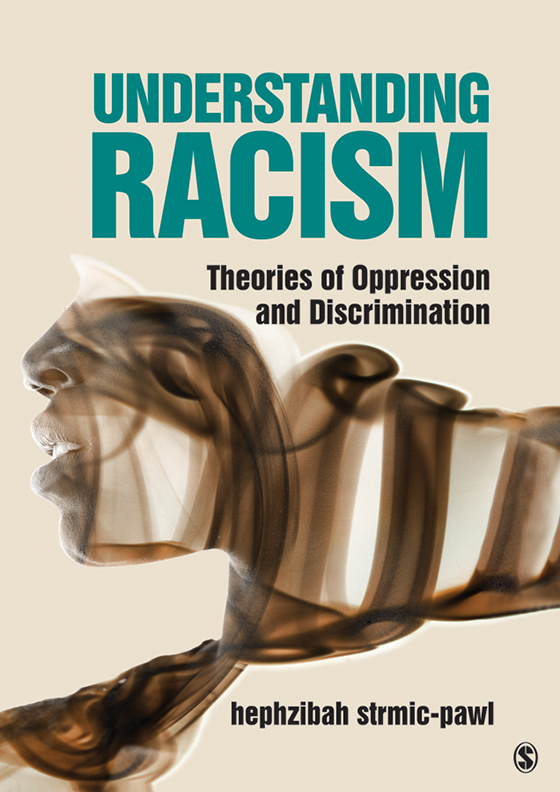
Understanding Racism
Theories of Oppression and Discrimination
If you’re in North America, please visit our Sage College Publishing website to purchase or sample this book:
Go to College Publishing WebsiteDescription
Recipient of a 2022 Most Promising New Textbook Award from the Textbook & Academic Authors Association (TAA)
The author is a proud sponsor of the 2020 SAGE Keith Roberts Teaching Innovations Award—enabling graduate students and early career faculty to attend the annual ASA pre-conference teaching and learning workshop.
Understanding Racism systematically examines the theories and theorists that have contributed the most to our contemporary understanding of racism in its various forms—making it easier for students to understand the multiple dynamics of how racism operates. In every chapter, activist and award-winning sociologist Hephzibah Strmic-Pawl describes the emergence of a theory and the problem it addresses; discusses the scholars who are most closely associated with the theory; and explores the strengths and limitations of the theory. From foundational theories such as Prejudice and White Privilege to contemporary theories such as Color-Blind Racism, Understanding Racism is the first text to present thirteen approaches for explaining racism in one book. The book's systematic organization and pedagogical features will help students think theoretically about race and racism at different levels of analysis, as well as reflect and discuss how to challenge racism.
The author is a proud sponsor of the 2020 SAGE Keith Roberts Teaching Innovations Award—enabling graduate students and early career faculty to attend the annual ASA pre-conference teaching and learning workshop.
Understanding Racism systematically examines the theories and theorists that have contributed the most to our contemporary understanding of racism in its various forms—making it easier for students to understand the multiple dynamics of how racism operates. In every chapter, activist and award-winning sociologist Hephzibah Strmic-Pawl describes the emergence of a theory and the problem it addresses; discusses the scholars who are most closely associated with the theory; and explores the strengths and limitations of the theory. From foundational theories such as Prejudice and White Privilege to contemporary theories such as Color-Blind Racism, Understanding Racism is the first text to present thirteen approaches for explaining racism in one book. The book's systematic organization and pedagogical features will help students think theoretically about race and racism at different levels of analysis, as well as reflect and discuss how to challenge racism.
Contents
Preface
Preface
Acknowledgments
Acknowledgments
About the Author
About the Author
Part 1: Foundational Theories
- Chapter 1: Prejudice and Discrimination (Gordon Allport and Robert Merton)
- Why This Theory
- Description of the Theory
- How to Challenge Racism
- By the Numbers
- Evaluation
- Additional Contribution: Merton’s Typology
- Conclusion
- Reflect and Discuss
- Diagram of Prejudice
- Diagram of Merton’s Typology
- Chapter 2: White Privilege (Robert Amico, Peggy McIntosh, Paula Rothenberg, and Tim Wise)
- Why This Theory
- Description of the Theory
- How to Challenge Racism
- By the Numbers
- Evaluation
- Conclusion
- Reflect and Discuss
- Diagram of White Privilege
- Chapter 3: White Supremacy (Charles Mills, Andrea Smith, and hephzibah strmic-pawl)
- Why This Theory
- Description of the Theory
- How to Challenge Racism
- By the Numbers
- Evaluation
- Additional Contributions to White Supremacy Theory: Smith and strmic-pawl
- Conclusion
- Reflect and Discuss
- Diagram of Mill’s Theory of the Racial Contract
- Diagram of Smith’s Theory of the 3 Pillars of White Supremacy
- Diagram of strmic-pawl’s The White Supremacy Flower
Part 2: Micro Level Theories
- Chapter 4: Implicit Bias (Anthony Greenwald, Mahzarin Banaji, and Brian Nosek)
- Why This Theory
- Description of the Theory
- How to Challenge Racism
- By the Numbers
- Evaluation
- Conclusion
- Reflect and Discuss
- Diagram of Implicit Bias
- Chapter 5: Microaggressions (Derald Wing Sue)
- Why This Theory
- Description of the Theory
- How to Challenge Racism
- By the Numbers
- Evaluation
- Conclusion
- Reflect and Discuss
- Diagram of Microaggressions
Part 3: Macro Level Theories
- Chapter 6: Racial Formation (Michael Omi and Howard Winant)
- Why This Theory
- Description of the Theory
- How to Challenge Racism
- By the Numbers
- Evaluation
- Conclusion
- Reflect and Discuss
- Diagram of Racial Formation
- Chapter 7: Systemic Racism (Joe Feagin)
- Why This Theory
- Description of the Theory
- How to Challenge Racism
- By the Numbers
- Evaluation
- Conclusion
- Reflect and Discuss
- Diagram of Systemic Racism
- Chapter 8: Critical Race Theory (Derrick Bell)
- Why This Theory
- Description of the Theory
- How to Challenge Racism
- By the Numbers
- Evaluation
- Conclusion
- Reflect and Discuss
- Diagram of Critical Race Theory
Part 4: From “Old Racism” to “New Racism”
- Chapter 9: Laissez-Faire Racism (Lawrence Bobo, James Kluegel, and Ryan Smith)
- Why This Theory
- Description of the Theory
- How to Challenge Racism
- By the Numbers
- Evaluation
- Conclusion
- Reflect and Discuss
- Diagram of Laissez-Faire Racism
- Chapter 10: Structure and Culture (William Julius Wilson)
- Why This Theory
- Description of the Theory
- How to Challenge Racism
- By the Numbers
- Evaluation
- Conclusion
- Reflect and Discuss
- Diagram of Structure and Culture
- Chapter 11: Color-Blind Racism (Eduardo Bonilla-Silva)
- Why This Theory
- Description of the Theory
- How to Challenge Racism
- By the Numbers
- Evaluation
- Conclusion
- Reflect and Discuss
- Diagram of Color-Blind Racism
Part 5: More Than Race
- Chapter 12: Colorism (Evelyn Nakano Glenn, Ronald Hall, Margaret Hunter, and Kimberly Norwood)
- Why This Theory
- Description of the Theory
- How to Challenge Racism
- By the Numbers
- Evaluation
- Conclusion
- Reflect and Discuss
- Diagram of Colorism
- Chapter 13: Intersectionality (Kimberlé Crenshaw)
- Why This Theory
- Description of the Theory
- How to Challenge Racism
- By the Numbers
- Evaluation
- Conclusion
- Reflect and Discuss
- Diagram of Intersectionality
References
References
Index
Index
Additional materials
Description
Recipient of a 2022 Most Promising New Textbook Award from the Textbook & Academic Authors Association (TAA)
The author is a proud sponsor of the 2020 SAGE Keith Roberts Teaching Innovations Award—enabling graduate students and early career faculty to attend the annual ASA pre-conference teaching and learning workshop.
Understanding Racism systematically examines the theories and theorists that have contributed the most to our contemporary understanding of racism in its various forms—making it easier for students to understand the multiple dynamics of how racism operates. In every chapter, activist and award-winning sociologist Hephzibah Strmic-Pawl describes the emergence of a theory and the problem it addresses; discusses the scholars who are most closely associated with the theory; and explores the strengths and limitations of the theory. From foundational theories such as Prejudice and White Privilege to contemporary theories such as Color-Blind Racism, Understanding Racism is the first text to present thirteen approaches for explaining racism in one book. The book's systematic organization and pedagogical features will help students think theoretically about race and racism at different levels of analysis, as well as reflect and discuss how to challenge racism.
The author is a proud sponsor of the 2020 SAGE Keith Roberts Teaching Innovations Award—enabling graduate students and early career faculty to attend the annual ASA pre-conference teaching and learning workshop.
Understanding Racism systematically examines the theories and theorists that have contributed the most to our contemporary understanding of racism in its various forms—making it easier for students to understand the multiple dynamics of how racism operates. In every chapter, activist and award-winning sociologist Hephzibah Strmic-Pawl describes the emergence of a theory and the problem it addresses; discusses the scholars who are most closely associated with the theory; and explores the strengths and limitations of the theory. From foundational theories such as Prejudice and White Privilege to contemporary theories such as Color-Blind Racism, Understanding Racism is the first text to present thirteen approaches for explaining racism in one book. The book's systematic organization and pedagogical features will help students think theoretically about race and racism at different levels of analysis, as well as reflect and discuss how to challenge racism.
Contents
Preface
Preface
Acknowledgments
Acknowledgments
About the Author
About the Author
Part 1: Foundational Theories
- Chapter 1: Prejudice and Discrimination (Gordon Allport and Robert Merton)
- Why This Theory
- Description of the Theory
- How to Challenge Racism
- By the Numbers
- Evaluation
- Additional Contribution: Merton’s Typology
- Conclusion
- Reflect and Discuss
- Diagram of Prejudice
- Diagram of Merton’s Typology
- Chapter 2: White Privilege (Robert Amico, Peggy McIntosh, Paula Rothenberg, and Tim Wise)
- Why This Theory
- Description of the Theory
- How to Challenge Racism
- By the Numbers
- Evaluation
- Conclusion
- Reflect and Discuss
- Diagram of White Privilege
- Chapter 3: White Supremacy (Charles Mills, Andrea Smith, and hephzibah strmic-pawl)
- Why This Theory
- Description of the Theory
- How to Challenge Racism
- By the Numbers
- Evaluation
- Additional Contributions to White Supremacy Theory: Smith and strmic-pawl
- Conclusion
- Reflect and Discuss
- Diagram of Mill’s Theory of the Racial Contract
- Diagram of Smith’s Theory of the 3 Pillars of White Supremacy
- Diagram of strmic-pawl’s The White Supremacy Flower
Part 2: Micro Level Theories
- Chapter 4: Implicit Bias (Anthony Greenwald, Mahzarin Banaji, and Brian Nosek)
- Why This Theory
- Description of the Theory
- How to Challenge Racism
- By the Numbers
- Evaluation
- Conclusion
- Reflect and Discuss
- Diagram of Implicit Bias
- Chapter 5: Microaggressions (Derald Wing Sue)
- Why This Theory
- Description of the Theory
- How to Challenge Racism
- By the Numbers
- Evaluation
- Conclusion
- Reflect and Discuss
- Diagram of Microaggressions
Part 3: Macro Level Theories
- Chapter 6: Racial Formation (Michael Omi and Howard Winant)
- Why This Theory
- Description of the Theory
- How to Challenge Racism
- By the Numbers
- Evaluation
- Conclusion
- Reflect and Discuss
- Diagram of Racial Formation
- Chapter 7: Systemic Racism (Joe Feagin)
- Why This Theory
- Description of the Theory
- How to Challenge Racism
- By the Numbers
- Evaluation
- Conclusion
- Reflect and Discuss
- Diagram of Systemic Racism
- Chapter 8: Critical Race Theory (Derrick Bell)
- Why This Theory
- Description of the Theory
- How to Challenge Racism
- By the Numbers
- Evaluation
- Conclusion
- Reflect and Discuss
- Diagram of Critical Race Theory
Part 4: From “Old Racism” to “New Racism”
- Chapter 9: Laissez-Faire Racism (Lawrence Bobo, James Kluegel, and Ryan Smith)
- Why This Theory
- Description of the Theory
- How to Challenge Racism
- By the Numbers
- Evaluation
- Conclusion
- Reflect and Discuss
- Diagram of Laissez-Faire Racism
- Chapter 10: Structure and Culture (William Julius Wilson)
- Why This Theory
- Description of the Theory
- How to Challenge Racism
- By the Numbers
- Evaluation
- Conclusion
- Reflect and Discuss
- Diagram of Structure and Culture
- Chapter 11: Color-Blind Racism (Eduardo Bonilla-Silva)
- Why This Theory
- Description of the Theory
- How to Challenge Racism
- By the Numbers
- Evaluation
- Conclusion
- Reflect and Discuss
- Diagram of Color-Blind Racism
Part 5: More Than Race
- Chapter 12: Colorism (Evelyn Nakano Glenn, Ronald Hall, Margaret Hunter, and Kimberly Norwood)
- Why This Theory
- Description of the Theory
- How to Challenge Racism
- By the Numbers
- Evaluation
- Conclusion
- Reflect and Discuss
- Diagram of Colorism
- Chapter 13: Intersectionality (Kimberlé Crenshaw)
- Why This Theory
- Description of the Theory
- How to Challenge Racism
- By the Numbers
- Evaluation
- Conclusion
- Reflect and Discuss
- Diagram of Intersectionality
References
References
Index
Index
Additional materials

June 2020 | 232 pages | Sage US
| Format | Published Date | ISBN | Price |
|---|
Recipient of a 2022 Most Promising New Textbook Award from the Textbook & Academic Authors Association (TAA)
The author is a proud sponsor of the 2020 SAGE Keith Roberts Teaching Innovations Award—enabling graduate students and early career faculty to attend the annual ASA pre-conference teaching and learning workshop.
Understanding Racism systematically examines the theories and theorists that have contributed the most to our contemporary understanding of racism in its various forms—making it easier for students to understand the multiple dynamics of how racism operates. In every chapter, activist and award-winning sociologist Hephzibah Strmic-Pawl describes the emergence of a theory and the problem it addresses; discusses the scholars who are most closely associated with the theory; and explores the strengths and limitations of the theory. From foundational theories such as Prejudice and White Privilege to contemporary theories such as Color-Blind Racism, Understanding Racism is the first text to present thirteen approaches for explaining racism in one book. The book's systematic organization and pedagogical features will help students think theoretically about race and racism at different levels of analysis, as well as reflect and discuss how to challenge racism.
The author is a proud sponsor of the 2020 SAGE Keith Roberts Teaching Innovations Award—enabling graduate students and early career faculty to attend the annual ASA pre-conference teaching and learning workshop.
Understanding Racism systematically examines the theories and theorists that have contributed the most to our contemporary understanding of racism in its various forms—making it easier for students to understand the multiple dynamics of how racism operates. In every chapter, activist and award-winning sociologist Hephzibah Strmic-Pawl describes the emergence of a theory and the problem it addresses; discusses the scholars who are most closely associated with the theory; and explores the strengths and limitations of the theory. From foundational theories such as Prejudice and White Privilege to contemporary theories such as Color-Blind Racism, Understanding Racism is the first text to present thirteen approaches for explaining racism in one book. The book's systematic organization and pedagogical features will help students think theoretically about race and racism at different levels of analysis, as well as reflect and discuss how to challenge racism.
Table Of Contents:
- Preface
- Acknowledgments
- About the Author
- Part 1: Foundational Theories
- Chapter 1: Prejudice and Discrimination (Gordon Allport and Robert Merton)
- Why This Theory
- Description of the Theory
- How to Challenge Racism
- By the Numbers
- Evaluation
- Additional Contribution: Merton’s Typology
- Conclusion
- Reflect and Discuss
- Diagram of Prejudice
- Diagram of Merton’s Typology
- Chapter 2: White Privilege (Robert Amico, Peggy McIntosh, Paula Rothenberg, and Tim Wise)
- Why This Theory
- Description of the Theory
- How to Challenge Racism
- By the Numbers
- Evaluation
- Conclusion
- Reflect and Discuss
- Diagram of White Privilege
- Chapter 3: White Supremacy (Charles Mills, Andrea Smith, and hephzibah strmic-pawl)
- Why This Theory
- Description of the Theory
- How to Challenge Racism
- By the Numbers
- Evaluation
- Additional Contributions to White Supremacy Theory: Smith and strmic-pawl
- Conclusion
- Reflect and Discuss
- Diagram of Mill’s Theory of the Racial Contract
- Diagram of Smith’s Theory of the 3 Pillars of White Supremacy
- Diagram of strmic-pawl’s The White Supremacy Flower
- Part 2: Micro Level Theories
- Chapter 4: Implicit Bias (Anthony Greenwald, Mahzarin Banaji, and Brian Nosek)
- Why This Theory
- Description of the Theory
- How to Challenge Racism
- By the Numbers
- Evaluation
- Conclusion
- Reflect and Discuss
- Diagram of Implicit Bias
- Chapter 5: Microaggressions (Derald Wing Sue)
- Why This Theory
- Description of the Theory
- How to Challenge Racism
- By the Numbers
- Evaluation
- Conclusion
- Reflect and Discuss
- Diagram of Microaggressions
- Part 3: Macro Level Theories
- Chapter 6: Racial Formation (Michael Omi and Howard Winant)
- Why This Theory
- Description of the Theory
- How to Challenge Racism
- By the Numbers
- Evaluation
- Conclusion
- Reflect and Discuss
- Diagram of Racial Formation
- Chapter 7: Systemic Racism (Joe Feagin)
- Why This Theory
- Description of the Theory
- How to Challenge Racism
- By the Numbers
- Evaluation
- Conclusion
- Reflect and Discuss
- Diagram of Systemic Racism
- Chapter 8: Critical Race Theory (Derrick Bell)
- Why This Theory
- Description of the Theory
- How to Challenge Racism
- By the Numbers
- Evaluation
- Conclusion
- Reflect and Discuss
- Diagram of Critical Race Theory
- Part 4: From “Old Racism” to “New Racism”
- Chapter 9: Laissez-Faire Racism (Lawrence Bobo, James Kluegel, and Ryan Smith)
- Why This Theory
- Description of the Theory
- How to Challenge Racism
- By the Numbers
- Evaluation
- Conclusion
- Reflect and Discuss
- Diagram of Laissez-Faire Racism
- Chapter 10: Structure and Culture (William Julius Wilson)
- Why This Theory
- Description of the Theory
- How to Challenge Racism
- By the Numbers
- Evaluation
- Conclusion
- Reflect and Discuss
- Diagram of Structure and Culture
- Chapter 11: Color-Blind Racism (Eduardo Bonilla-Silva)
- Why This Theory
- Description of the Theory
- How to Challenge Racism
- By the Numbers
- Evaluation
- Conclusion
- Reflect and Discuss
- Diagram of Color-Blind Racism
- Part 5: More Than Race
- Chapter 12: Colorism (Evelyn Nakano Glenn, Ronald Hall, Margaret Hunter, and Kimberly Norwood)
- Why This Theory
- Description of the Theory
- How to Challenge Racism
- By the Numbers
- Evaluation
- Conclusion
- Reflect and Discuss
- Diagram of Colorism
- Chapter 13: Intersectionality (Kimberlé Crenshaw)
- Why This Theory
- Description of the Theory
- How to Challenge Racism
- By the Numbers
- Evaluation
- Conclusion
- Reflect and Discuss
- Diagram of Intersectionality
- References
- Index