Social Work Practice With Older Adults

If you’re in the Americas, please visit our Sage College Publishing website to purchase or sample this book:
Go to College Publishing WebsiteDescription
Social Work Practice With Older Adults by Jill Chonody and Barbra Teater presents a contemporary framework based on the World Health Organization’s active aging policy that allows forward-thinking students to focus on client strengths and resources when working with the elderly. The Actively Aging framework takes into account health, social, behavioral, economic, and personal factors as they relate to aging, but also explores environmental issues, which aligns with the new educational standards put forth by the Council on Social Work Education. Covering micro, mezzo, and macro practice domains, the text examines all aspects of working with aging populations, from assessment through termination.
Online Resources
Free online resources are available with this text, including essay questions, exercises, activities, and a list of articles and video clips. Contact your rep to learn more.
Contents
Acknowledgments
Acknowledgments
About the Authors
- 1 Introduction to Aging
- LEARNING OBJECTIVES
- Introduction
- What Is “Old” Age?
- Population Changes
- Cohort Effects and Impact on Practice
- Summary
- Key Words
- Critical Thinking Questions and Activities
- 2 Aging and Ageism: Cultural Influences
- LEARNING OBJECTIVES
- Introduction
- Ageism
- Theoretical Explanations for Ageism
- Ageism and Intersectionality
- Reducing Ageism
- Summary
- Key Words
- Critical Thinking Questions and Activities
- 3 Actively Aging and Social Work Practice
- LEARNING OBJECTIVES
- Introduction
- The Development of Active Aging
- Active Aging and Other “Positive” Theories or Frameworks of Aging
- Theoretical Approaches to Social Work and Social Work Values and Ethical Principles
- Active Aging From the Perspective of Older Adults
- Actively Aging: Social Work Assessment and Intervention
- Summary
- Key Words
- Critical Thinking Questions and Activities
- 4 Health Determinants
- LEARNING OBJECTIVES
- Introduction
- Health Promotion and Disease Prevention Efforts
- Age-Related Disabilities
- Mental Health and Neurocognitive Disorders
- Noncommunicable Diseases (NCD)
- Informal and Formal Supports
- Micro Practice: Intervention for Individuals and Groups
- Mezzo Practice: Working With the Community
- Macro Practice: Policy and Advocacy
- Summary
- Key Words
- Critical Thinking Questions and Activities
- 5 Behavioral Determinants
- LEARNING OBJECTIVES
- Introduction
- Health and Well-Being and the Big Four Behaviors
- Tobacco Use
- Alcohol and Substance Use
- Physical Activity
- Diet
- Sleep
- Sexual Activity
- Oral Health
- Medications and Healthcare Screenings
- Micro Practice: Interventions for Individuals and Groups
- Mezzo Practice: Working With the Community
- Macro Practice: Policy and Advocacy
- Summary
- Key Words
- Critical Thinking Questions and Activities
- 6 Personal Determinants
- LEARNING OBJECTIVES
- Introduction
- Biology and Genes
- Psychological Factors
- Spirituality/Religion
- Micro Practice: Interventions for Individuals and Groups
- Mezzo Practice: Working With the Community
- Macro Practice: Policy and Advocacy
- Summary
- Key Words
- Critical Thinking Questions and Activities
- 7 Social Determinants
- LEARNING OBJECTIVES
- Introduction
- Social Support
- Violence, Abuse, Neglect, and Exploitation
- Education and Literacy
- Micro Practice: Interventions for Individuals and Groups
- Mezzo Practice: Working With the Community
- Macro Practice: Policy and Advocacy
- Summary
- Key Words
- Critical Thinking Questions and Activities
- 8 Economic Determinants
- LEARNING OBJECTIVES
- Introduction
- Income
- Work and Retirement
- Social Protection
- Micro Practice: Interventions for Individuals and Groups
- Mezzo Practice: Working With the Community
- Macro Practice: Policy and Advocacy
- Summary
- Key Words
- Critical Thinking Questions and Activities
- 9 Physical Determinants
- LEARNING OBJECTIVES
- Introduction
- Safe Housing
- Environmental Factors
- Micro Practice: Intervention for Individuals and Groups
- Mezzo Practice: Working With the Community
- Macro Practice: Policy and Advocacy
- Summary
- Key Words
- Critical Thinking Question and Activities
- 10 Ethics and Ethical Considerations
- LEARNING OBJECTIVES
- Introduction
- Ethics
- Autonomy
- Independence
- Elder Abuse
- End-of-Life
- Summary
- Key Words
- Critical Thinking Questions and Activities
- 11 Actively Aging and Social Work Practice: Case Studies
- Case A: Sylvia
- Case B: Randall
- Case C: Roberto
- Case D: Elizabeth
- Actively Aging Assessment
- 12 The Future of an Actively Aging Society
- LEARNING OBJECTIVES
- Introduction
- Micro Practice: Intervention for Individuals and Groups
- Group Work
- Mezzo Practice: Working With the Community
- Macro Practice: Policy and Advocacy
- Summary
- Key Words
- Critical Thinking Questions and Activities
Glossary
Glossary
References
References
Index
Index
Description
Social Work Practice With Older Adults by Jill Chonody and Barbra Teater presents a contemporary framework based on the World Health Organization’s active aging policy that allows forward-thinking students to focus on client strengths and resources when working with the elderly. The Actively Aging framework takes into account health, social, behavioral, economic, and personal factors as they relate to aging, but also explores environmental issues, which aligns with the new educational standards put forth by the Council on Social Work Education. Covering micro, mezzo, and macro practice domains, the text examines all aspects of working with aging populations, from assessment through termination.
Online Resources
Free online resources are available with this text, including essay questions, exercises, activities, and a list of articles and video clips. Contact your rep to learn more.
Contents
Acknowledgments
Acknowledgments
About the Authors
- 1 Introduction to Aging
- LEARNING OBJECTIVES
- Introduction
- What Is “Old” Age?
- Population Changes
- Cohort Effects and Impact on Practice
- Summary
- Key Words
- Critical Thinking Questions and Activities
- 2 Aging and Ageism: Cultural Influences
- LEARNING OBJECTIVES
- Introduction
- Ageism
- Theoretical Explanations for Ageism
- Ageism and Intersectionality
- Reducing Ageism
- Summary
- Key Words
- Critical Thinking Questions and Activities
- 3 Actively Aging and Social Work Practice
- LEARNING OBJECTIVES
- Introduction
- The Development of Active Aging
- Active Aging and Other “Positive” Theories or Frameworks of Aging
- Theoretical Approaches to Social Work and Social Work Values and Ethical Principles
- Active Aging From the Perspective of Older Adults
- Actively Aging: Social Work Assessment and Intervention
- Summary
- Key Words
- Critical Thinking Questions and Activities
- 4 Health Determinants
- LEARNING OBJECTIVES
- Introduction
- Health Promotion and Disease Prevention Efforts
- Age-Related Disabilities
- Mental Health and Neurocognitive Disorders
- Noncommunicable Diseases (NCD)
- Informal and Formal Supports
- Micro Practice: Intervention for Individuals and Groups
- Mezzo Practice: Working With the Community
- Macro Practice: Policy and Advocacy
- Summary
- Key Words
- Critical Thinking Questions and Activities
- 5 Behavioral Determinants
- LEARNING OBJECTIVES
- Introduction
- Health and Well-Being and the Big Four Behaviors
- Tobacco Use
- Alcohol and Substance Use
- Physical Activity
- Diet
- Sleep
- Sexual Activity
- Oral Health
- Medications and Healthcare Screenings
- Micro Practice: Interventions for Individuals and Groups
- Mezzo Practice: Working With the Community
- Macro Practice: Policy and Advocacy
- Summary
- Key Words
- Critical Thinking Questions and Activities
- 6 Personal Determinants
- LEARNING OBJECTIVES
- Introduction
- Biology and Genes
- Psychological Factors
- Spirituality/Religion
- Micro Practice: Interventions for Individuals and Groups
- Mezzo Practice: Working With the Community
- Macro Practice: Policy and Advocacy
- Summary
- Key Words
- Critical Thinking Questions and Activities
- 7 Social Determinants
- LEARNING OBJECTIVES
- Introduction
- Social Support
- Violence, Abuse, Neglect, and Exploitation
- Education and Literacy
- Micro Practice: Interventions for Individuals and Groups
- Mezzo Practice: Working With the Community
- Macro Practice: Policy and Advocacy
- Summary
- Key Words
- Critical Thinking Questions and Activities
- 8 Economic Determinants
- LEARNING OBJECTIVES
- Introduction
- Income
- Work and Retirement
- Social Protection
- Micro Practice: Interventions for Individuals and Groups
- Mezzo Practice: Working With the Community
- Macro Practice: Policy and Advocacy
- Summary
- Key Words
- Critical Thinking Questions and Activities
- 9 Physical Determinants
- LEARNING OBJECTIVES
- Introduction
- Safe Housing
- Environmental Factors
- Micro Practice: Intervention for Individuals and Groups
- Mezzo Practice: Working With the Community
- Macro Practice: Policy and Advocacy
- Summary
- Key Words
- Critical Thinking Question and Activities
- 10 Ethics and Ethical Considerations
- LEARNING OBJECTIVES
- Introduction
- Ethics
- Autonomy
- Independence
- Elder Abuse
- End-of-Life
- Summary
- Key Words
- Critical Thinking Questions and Activities
- 11 Actively Aging and Social Work Practice: Case Studies
- Case A: Sylvia
- Case B: Randall
- Case C: Roberto
- Case D: Elizabeth
- Actively Aging Assessment
- 12 The Future of an Actively Aging Society
- LEARNING OBJECTIVES
- Introduction
- Micro Practice: Intervention for Individuals and Groups
- Group Work
- Mezzo Practice: Working With the Community
- Macro Practice: Policy and Advocacy
- Summary
- Key Words
- Critical Thinking Questions and Activities
Glossary
Glossary
References
References
Index
Index
Reviews
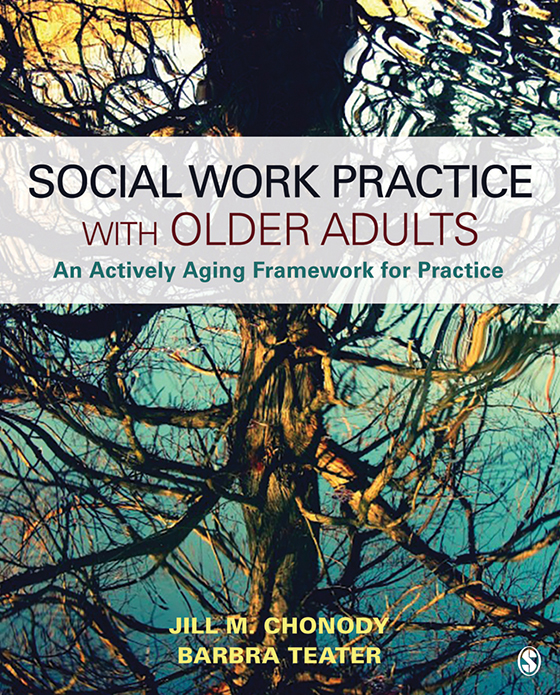

Social Work Practice With Older Adults
An Actively Aging Framework for Practice
November 2017 | 416 pages | Sage US
| Format | Published Date | ISBN | Price |
|---|
Social Work Practice With Older Adults by Jill Chonody and Barbra Teater presents a contemporary framework based on the World Health Organization’s active aging policy that allows forward-thinking students to focus on client strengths and resources when working with the elderly. The Actively Aging framework takes into account health, social, behavioral, economic, and personal factors as they relate to aging, but also explores environmental issues, which aligns with the new educational standards put forth by the Council on Social Work Education. Covering micro, mezzo, and macro practice domains, the text examines all aspects of working with aging populations, from assessment through termination.
Online Resources
Free online resources are available with this text, including essay questions, exercises, activities, and a list of articles and video clips. Contact your rep to learn more.
Table Of Contents:
- Acknowledgments
- About the Authors
- 1 Introduction to Aging
- LEARNING OBJECTIVES
- Introduction
- What Is “Old” Age?
- Population Changes
- Cohort Effects and Impact on Practice
- Summary
- Key Words
- Critical Thinking Questions and Activities
- 2 Aging and Ageism: Cultural Influences
- LEARNING OBJECTIVES
- Introduction
- Ageism
- Theoretical Explanations for Ageism
- Ageism and Intersectionality
- Reducing Ageism
- Summary
- Key Words
- Critical Thinking Questions and Activities
- 3 Actively Aging and Social Work Practice
- LEARNING OBJECTIVES
- Introduction
- The Development of Active Aging
- Active Aging and Other “Positive” Theories or Frameworks of Aging
- Theoretical Approaches to Social Work and Social Work Values and Ethical Principles
- Active Aging From the Perspective of Older Adults
- Actively Aging: Social Work Assessment and Intervention
- Summary
- Key Words
- Critical Thinking Questions and Activities
- 4 Health Determinants
- LEARNING OBJECTIVES
- Introduction
- Health Promotion and Disease Prevention Efforts
- Age-Related Disabilities
- Mental Health and Neurocognitive Disorders
- Noncommunicable Diseases (NCD)
- Informal and Formal Supports
- Micro Practice: Intervention for Individuals and Groups
- Mezzo Practice: Working With the Community
- Macro Practice: Policy and Advocacy
- Summary
- Key Words
- Critical Thinking Questions and Activities
- 5 Behavioral Determinants
- LEARNING OBJECTIVES
- Introduction
- Health and Well-Being and the Big Four Behaviors
- Tobacco Use
- Alcohol and Substance Use
- Physical Activity
- Diet
- Sleep
- Sexual Activity
- Oral Health
- Medications and Healthcare Screenings
- Micro Practice: Interventions for Individuals and Groups
- Mezzo Practice: Working With the Community
- Macro Practice: Policy and Advocacy
- Summary
- Key Words
- Critical Thinking Questions and Activities
- 6 Personal Determinants
- LEARNING OBJECTIVES
- Introduction
- Biology and Genes
- Psychological Factors
- Spirituality/Religion
- Micro Practice: Interventions for Individuals and Groups
- Mezzo Practice: Working With the Community
- Macro Practice: Policy and Advocacy
- Summary
- Key Words
- Critical Thinking Questions and Activities
- 7 Social Determinants
- LEARNING OBJECTIVES
- Introduction
- Social Support
- Violence, Abuse, Neglect, and Exploitation
- Education and Literacy
- Micro Practice: Interventions for Individuals and Groups
- Mezzo Practice: Working With the Community
- Macro Practice: Policy and Advocacy
- Summary
- Key Words
- Critical Thinking Questions and Activities
- 8 Economic Determinants
- LEARNING OBJECTIVES
- Introduction
- Income
- Work and Retirement
- Social Protection
- Micro Practice: Interventions for Individuals and Groups
- Mezzo Practice: Working With the Community
- Macro Practice: Policy and Advocacy
- Summary
- Key Words
- Critical Thinking Questions and Activities
- 9 Physical Determinants
- LEARNING OBJECTIVES
- Introduction
- Safe Housing
- Environmental Factors
- Micro Practice: Intervention for Individuals and Groups
- Mezzo Practice: Working With the Community
- Macro Practice: Policy and Advocacy
- Summary
- Key Words
- Critical Thinking Question and Activities
- 10 Ethics and Ethical Considerations
- LEARNING OBJECTIVES
- Introduction
- Ethics
- Autonomy
- Independence
- Elder Abuse
- End-of-Life
- Summary
- Key Words
- Critical Thinking Questions and Activities
- 11 Actively Aging and Social Work Practice: Case Studies
- Case A: Sylvia
- Case B: Randall
- Case C: Roberto
- Case D: Elizabeth
- Actively Aging Assessment
- 12 The Future of an Actively Aging Society
- LEARNING OBJECTIVES
- Introduction
- Micro Practice: Intervention for Individuals and Groups
- Group Work
- Mezzo Practice: Working With the Community
- Macro Practice: Policy and Advocacy
- Summary
- Key Words
- Critical Thinking Questions and Activities
- Glossary
- References
- Index