Artificial Intelligence and Work
Transforming Work, Organizations, and Society in an Age of Insecurity
If you’re in North America, please visit our Sage College Publishing website to purchase or sample this book:
Go to College Publishing WebsiteDescription
In an era marked by insecurity from neoliberalism, financial volatility, political instability, regional conflicts, pandemics, and the climate crisis, Artificial Intelligence (AI) is revolutionizing our work, organizations, societies, and the environment. This critical text explores who truly benefits from AI's development and deployment, offering a comprehensive overview of AI's nature, history, and applications. It delves into crucial themes such as the future of work, digitalization, neoliberalism's impact, power dynamics, ethics, inequality, gender, race, intersectional discrimination, and environmental sustainability.
Unlike practical machine learning guides, this book examines how AI and AI-based technologies are transforming work, highlighting both benefits and potential harms. Combining critical management and leadership studies with organizational sociology, it addresses societal implications, inequality, ethics, and power often overlooked by other textbooks. John Bratton's lucid and engaging writing style brings a cutting-edge subject to life, blending breadth, critical analysis, and academic rigor. Contemporary examples illustrate AI's real-life implications for organizations and work today, while thought-provoking questions encourage readers to engage with and reflect on the topics throughout.
Authored by John Bratton, an Honorary Professor at Queen’s University Belfast, and Laura Steele, a Senior Lecturer in Business and Society at Queen’s University Belfast, this interdisciplinary text is essential for students studying contemporary and emerging issues in business and management, including AI, business analytics, digitalization, and the future of work. It is also recommended for courses on the sociology of work, ethics, organization studies, management, leadership, and HRM. This book is poised to become an essential textbook for courses on AI, digitalization, and the future of work, making it a valuable resource for students and educators alike.
Unlike practical machine learning guides, this book examines how AI and AI-based technologies are transforming work, highlighting both benefits and potential harms. Combining critical management and leadership studies with organizational sociology, it addresses societal implications, inequality, ethics, and power often overlooked by other textbooks. John Bratton's lucid and engaging writing style brings a cutting-edge subject to life, blending breadth, critical analysis, and academic rigor. Contemporary examples illustrate AI's real-life implications for organizations and work today, while thought-provoking questions encourage readers to engage with and reflect on the topics throughout.
Authored by John Bratton, an Honorary Professor at Queen’s University Belfast, and Laura Steele, a Senior Lecturer in Business and Society at Queen’s University Belfast, this interdisciplinary text is essential for students studying contemporary and emerging issues in business and management, including AI, business analytics, digitalization, and the future of work. It is also recommended for courses on the sociology of work, ethics, organization studies, management, leadership, and HRM. This book is poised to become an essential textbook for courses on AI, digitalization, and the future of work, making it a valuable resource for students and educators alike.
Contents
Part 1 Historical and Global Context
- 1 Technology, Societal Change, and Artificial Intelligence
- 2 The New Dark Age of Artificial Intelligence
- 3 Neoliberalism and Global Supply Chains
- 4 Global AI Policies and International Business
- 5 Financialization, Artificial Intelligence, and Employment
- 6 The New Enigmas: AI and Platform Work
- 7 Just AI? Gender, Power, and Intersectional Discrimination
Part 2 Key Issues
- 8 Power and Artificial Intelligence
- 9 Developing and Deploying Ethical AI: A Global Challenge
- 10 Artificial Intelligence and Leadership
- 11 The Power of AI to Reshape Human Resource Management
- 12 Artificial Intelligence and Workers’ Voice: A Threat to Democracy?
- 13 Re-thinking Work-Life Balance in the Age of AI: Exploring the Intersections of Gender, Race, Age, and Disability
- 14 AI and Organizational Sustainability in the Face of the Climate Crisis
Description
In an era marked by insecurity from neoliberalism, financial volatility, political instability, regional conflicts, pandemics, and the climate crisis, Artificial Intelligence (AI) is revolutionizing our work, organizations, societies, and the environment. This critical text explores who truly benefits from AI's development and deployment, offering a comprehensive overview of AI's nature, history, and applications. It delves into crucial themes such as the future of work, digitalization, neoliberalism's impact, power dynamics, ethics, inequality, gender, race, intersectional discrimination, and environmental sustainability.
Unlike practical machine learning guides, this book examines how AI and AI-based technologies are transforming work, highlighting both benefits and potential harms. Combining critical management and leadership studies with organizational sociology, it addresses societal implications, inequality, ethics, and power often overlooked by other textbooks. John Bratton's lucid and engaging writing style brings a cutting-edge subject to life, blending breadth, critical analysis, and academic rigor. Contemporary examples illustrate AI's real-life implications for organizations and work today, while thought-provoking questions encourage readers to engage with and reflect on the topics throughout.
Authored by John Bratton, an Honorary Professor at Queen’s University Belfast, and Laura Steele, a Senior Lecturer in Business and Society at Queen’s University Belfast, this interdisciplinary text is essential for students studying contemporary and emerging issues in business and management, including AI, business analytics, digitalization, and the future of work. It is also recommended for courses on the sociology of work, ethics, organization studies, management, leadership, and HRM. This book is poised to become an essential textbook for courses on AI, digitalization, and the future of work, making it a valuable resource for students and educators alike.
Unlike practical machine learning guides, this book examines how AI and AI-based technologies are transforming work, highlighting both benefits and potential harms. Combining critical management and leadership studies with organizational sociology, it addresses societal implications, inequality, ethics, and power often overlooked by other textbooks. John Bratton's lucid and engaging writing style brings a cutting-edge subject to life, blending breadth, critical analysis, and academic rigor. Contemporary examples illustrate AI's real-life implications for organizations and work today, while thought-provoking questions encourage readers to engage with and reflect on the topics throughout.
Authored by John Bratton, an Honorary Professor at Queen’s University Belfast, and Laura Steele, a Senior Lecturer in Business and Society at Queen’s University Belfast, this interdisciplinary text is essential for students studying contemporary and emerging issues in business and management, including AI, business analytics, digitalization, and the future of work. It is also recommended for courses on the sociology of work, ethics, organization studies, management, leadership, and HRM. This book is poised to become an essential textbook for courses on AI, digitalization, and the future of work, making it a valuable resource for students and educators alike.
Contents
Part 1 Historical and Global Context
- 1 Technology, Societal Change, and Artificial Intelligence
- 2 The New Dark Age of Artificial Intelligence
- 3 Neoliberalism and Global Supply Chains
- 4 Global AI Policies and International Business
- 5 Financialization, Artificial Intelligence, and Employment
- 6 The New Enigmas: AI and Platform Work
- 7 Just AI? Gender, Power, and Intersectional Discrimination
Part 2 Key Issues
- 8 Power and Artificial Intelligence
- 9 Developing and Deploying Ethical AI: A Global Challenge
- 10 Artificial Intelligence and Leadership
- 11 The Power of AI to Reshape Human Resource Management
- 12 Artificial Intelligence and Workers’ Voice: A Threat to Democracy?
- 13 Re-thinking Work-Life Balance in the Age of AI: Exploring the Intersections of Gender, Race, Age, and Disability
- 14 AI and Organizational Sustainability in the Face of the Climate Crisis
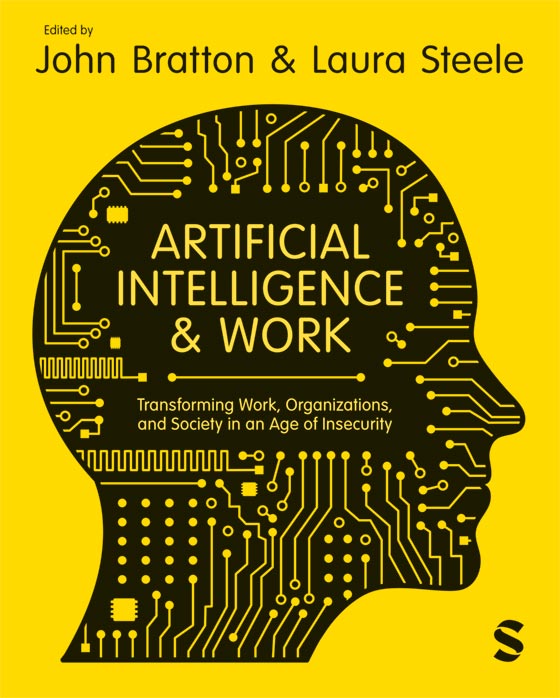

Artificial Intelligence and Work
Transforming Work, Organizations, and Society in an Age of Insecurity
December 2024 | 296 pages | Sage UK
| Format | Published Date | ISBN | Price |
|---|
In an era marked by insecurity from neoliberalism, financial volatility, political instability, regional conflicts, pandemics, and the climate crisis, Artificial Intelligence (AI) is revolutionizing our work, organizations, societies, and the environment. This critical text explores who truly benefits from AI's development and deployment, offering a comprehensive overview of AI's nature, history, and applications. It delves into crucial themes such as the future of work, digitalization, neoliberalism's impact, power dynamics, ethics, inequality, gender, race, intersectional discrimination, and environmental sustainability.
Unlike practical machine learning guides, this book examines how AI and AI-based technologies are transforming work, highlighting both benefits and potential harms. Combining critical management and leadership studies with organizational sociology, it addresses societal implications, inequality, ethics, and power often overlooked by other textbooks. John Bratton's lucid and engaging writing style brings a cutting-edge subject to life, blending breadth, critical analysis, and academic rigor. Contemporary examples illustrate AI's real-life implications for organizations and work today, while thought-provoking questions encourage readers to engage with and reflect on the topics throughout.
Authored by John Bratton, an Honorary Professor at Queen’s University Belfast, and Laura Steele, a Senior Lecturer in Business and Society at Queen’s University Belfast, this interdisciplinary text is essential for students studying contemporary and emerging issues in business and management, including AI, business analytics, digitalization, and the future of work. It is also recommended for courses on the sociology of work, ethics, organization studies, management, leadership, and HRM. This book is poised to become an essential textbook for courses on AI, digitalization, and the future of work, making it a valuable resource for students and educators alike.
Unlike practical machine learning guides, this book examines how AI and AI-based technologies are transforming work, highlighting both benefits and potential harms. Combining critical management and leadership studies with organizational sociology, it addresses societal implications, inequality, ethics, and power often overlooked by other textbooks. John Bratton's lucid and engaging writing style brings a cutting-edge subject to life, blending breadth, critical analysis, and academic rigor. Contemporary examples illustrate AI's real-life implications for organizations and work today, while thought-provoking questions encourage readers to engage with and reflect on the topics throughout.
Authored by John Bratton, an Honorary Professor at Queen’s University Belfast, and Laura Steele, a Senior Lecturer in Business and Society at Queen’s University Belfast, this interdisciplinary text is essential for students studying contemporary and emerging issues in business and management, including AI, business analytics, digitalization, and the future of work. It is also recommended for courses on the sociology of work, ethics, organization studies, management, leadership, and HRM. This book is poised to become an essential textbook for courses on AI, digitalization, and the future of work, making it a valuable resource for students and educators alike.
Table Of Contents:
- Part 1 Historical and Global Context
- 1 Technology, Societal Change, and Artificial Intelligence
- 2 The New Dark Age of Artificial Intelligence
- 3 Neoliberalism and Global Supply Chains
- 4 Global AI Policies and International Business
- 5 Financialization, Artificial Intelligence, and Employment
- 6 The New Enigmas: AI and Platform Work
- 7 Just AI? Gender, Power, and Intersectional Discrimination
- Part 2 Key Issues
- 8 Power and Artificial Intelligence
- 9 Developing and Deploying Ethical AI: A Global Challenge
- 10 Artificial Intelligence and Leadership
- 11 The Power of AI to Reshape Human Resource Management
- 12 Artificial Intelligence and Workers’ Voice: A Threat to Democracy?
- 13 Re-thinking Work-Life Balance in the Age of AI: Exploring the Intersections of Gender, Race, Age, and Disability
- 14 AI and Organizational Sustainability in the Face of the Climate Crisis