Decoding the Ethics Code
If you’re in North America, please visit our Sage College Publishing website to purchase or sample this book:
Go to College Publishing WebsiteDescription
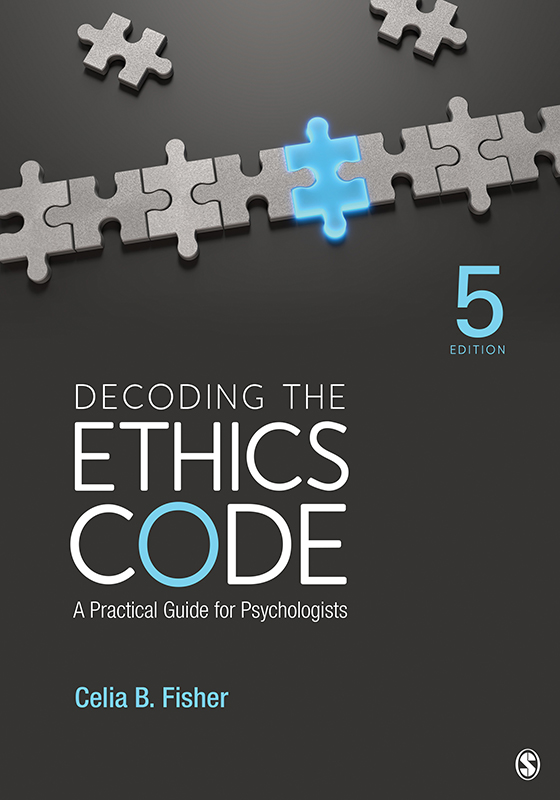
Revised to reflect the latest edition of the American Psychological Association’s (APA) Ethical Principles of Psychologists and Code of Conduct, Celia B. Fisher’s acclaimed Decoding the Ethics Code Fifth Edition explains and puts into practical perspective the format, choice of wording, aspirational principles, and enforceability of the code. Providing in-depth discussions of the foundation and application of each ethical standard to the broad spectrum of scientific, teaching, and professional roles of psychologists, this unique guide helps practitioners effectively use ethical principles and standards to morally conduct their work, avoid ethical violations, and, most importantly, preserve and protect the fundamental rights and welfare of those whom they serve. This edition covers crucial and timely topics, with new sections on the impact of the COVID-19 pandemic and strategies for applying the social justice and liberation psychology moral frameworks to ethical decision making; addressing personal biases and the prejudices of those with whom psychologists work; and healing and self-care for Black, Indigenous, and People of Color psychologists, students and trainees.
Contents
Part I. Introduction and Background
- Chapter 1. A Code of Ethics for Psychology: How Did We Get Here?
- Chapter 2. The Ethics Code Introduction and Preamble, and Relationship to Enforcement and Law. What Do They Mean?
- Chapter 3. General Principles, Ethical Commitment and Virtues in Psychology
- Chapter 4. Ethical Theories and Ethical Decision Making
Part II. Enforceable Standards
- Chapter 5. Standards for Resolving Ethical Issues
- Chapter 6. Standards on Competence
- Chapter 7. Standards on Human Relations
- Chapter 8. Standards on Privacy and Confidentiality
- Chapter 9. Standards on Advertising and Other Public Statements
- Chapter 10. Standards on Record Keeping and Fees
- Chapter 11. Standards on Education and Training
- Chapter 12. Standards on Research and Publication
- Chapter 13. Standards on Assessment
- Chapter 14. Standards on Therapy
Description
Revised to reflect the latest edition of the American Psychological Association’s (APA) Ethical Principles of Psychologists and Code of Conduct, Celia B. Fisher’s acclaimed Decoding the Ethics Code Fifth Edition explains and puts into practical perspective the format, choice of wording, aspirational principles, and enforceability of the code. Providing in-depth discussions of the foundation and application of each ethical standard to the broad spectrum of scientific, teaching, and professional roles of psychologists, this unique guide helps practitioners effectively use ethical principles and standards to morally conduct their work, avoid ethical violations, and, most importantly, preserve and protect the fundamental rights and welfare of those whom they serve. This edition covers crucial and timely topics, with new sections on the impact of the COVID-19 pandemic and strategies for applying the social justice and liberation psychology moral frameworks to ethical decision making; addressing personal biases and the prejudices of those with whom psychologists work; and healing and self-care for Black, Indigenous, and People of Color psychologists, students and trainees.
Contents
Part I. Introduction and Background
- Chapter 1. A Code of Ethics for Psychology: How Did We Get Here?
- Chapter 2. The Ethics Code Introduction and Preamble, and Relationship to Enforcement and Law. What Do They Mean?
- Chapter 3. General Principles, Ethical Commitment and Virtues in Psychology
- Chapter 4. Ethical Theories and Ethical Decision Making
Part II. Enforceable Standards
- Chapter 5. Standards for Resolving Ethical Issues
- Chapter 6. Standards on Competence
- Chapter 7. Standards on Human Relations
- Chapter 8. Standards on Privacy and Confidentiality
- Chapter 9. Standards on Advertising and Other Public Statements
- Chapter 10. Standards on Record Keeping and Fees
- Chapter 11. Standards on Education and Training
- Chapter 12. Standards on Research and Publication
- Chapter 13. Standards on Assessment
- Chapter 14. Standards on Therapy

December 2021 | 616 pages | Sage US
| Format | Published Date | ISBN | Price |
|---|
Revised to reflect the latest edition of the American Psychological Association’s (APA) Ethical Principles of Psychologists and Code of Conduct, Celia B. Fisher’s acclaimed Decoding the Ethics Code Fifth Edition explains and puts into practical perspective the format, choice of wording, aspirational principles, and enforceability of the code. Providing in-depth discussions of the foundation and application of each ethical standard to the broad spectrum of scientific, teaching, and professional roles of psychologists, this unique guide helps practitioners effectively use ethical principles and standards to morally conduct their work, avoid ethical violations, and, most importantly, preserve and protect the fundamental rights and welfare of those whom they serve. This edition covers crucial and timely topics, with new sections on the impact of the COVID-19 pandemic and strategies for applying the social justice and liberation psychology moral frameworks to ethical decision making; addressing personal biases and the prejudices of those with whom psychologists work; and healing and self-care for Black, Indigenous, and People of Color psychologists, students and trainees.
Table Of Contents:
- Part I. Introduction and Background
- Chapter 1. A Code of Ethics for Psychology: How Did We Get Here?
- Chapter 2. The Ethics Code Introduction and Preamble, and Relationship to Enforcement and Law. What Do They Mean?
- Chapter 3. General Principles, Ethical Commitment and Virtues in Psychology
- Chapter 4. Ethical Theories and Ethical Decision Making
- Part II. Enforceable Standards
- Chapter 5. Standards for Resolving Ethical Issues
- Chapter 6. Standards on Competence
- Chapter 7. Standards on Human Relations
- Chapter 8. Standards on Privacy and Confidentiality
- Chapter 9. Standards on Advertising and Other Public Statements
- Chapter 10. Standards on Record Keeping and Fees
- Chapter 11. Standards on Education and Training
- Chapter 12. Standards on Research and Publication
- Chapter 13. Standards on Assessment
- Chapter 14. Standards on Therapy